Booking a home you've never stood in, in a city you've never visited, in a country you haven't landed in yet — and paying for it — is one of the more nerve-wracking things an international student does. It's also completely routine, and thousands do it successfully every intake. The difference between the students who arrive to a signed lease and the ones who arrive to a vanished landlord is almost never luck. It's process. Here's the one to follow.
First, decide what you're actually solving for
There are two defensible strategies, and it's worth choosing deliberately:
Book permanent housing before you fly. You land, you move in, you're done. This is the right call if you can verify the property properly — and it's the only realistic option if you're arriving in late August, when the good inventory is gone.
Book two to four weeks of temporary housing, then search in person. Lower risk of a remote-booking mistake, higher risk of arriving into a picked-over market and paying for temporary accommodation while you hunt in your first weeks of term.
Most students who arrive for a September start and want to be settled choose the first. If you do, the verification below is not optional — it's the whole job.
The verification checklist
Work through this before any money moves.
1. Establish who you're dealing with. There's a meaningful difference between a professionally managed building — a company with a real website, a leasing team, a physical office and a reputation to protect — and an individual renting a spare room from a personal account. Both can be legitimate. Only one is easy to verify from 6,000 kilometres away. If you're booking sight-unseen, weight heavily toward the former.
2. Confirm the building physically exists. Put the street address into a map and satellite view. Does the building in the listing photos match the building at that address? Does the neighbourhood look like the photos? Scammers reuse real photos of buildings they have nothing to do with, so matching the address to the photos is the test — not just admiring the photos.
3. Demand a live video tour — not a recording. This is the single highest-value step. A recorded walkthrough can be lifted from any listing. A live video call, where you can ask the person to walk to the window, show you the actual unit number, or point the camera where you choose, is very hard to fake. Any operator booking international students routinely will offer this without being asked. Anyone who refuses every form of live viewing has told you what you need to know.
4. Read the lease before you sign it — properly. Check the term length and whether it matches your programme (a standard Ontario lease is 12 months; an academic year is roughly eight). Check what's included. Check the deposit terms against the law below. If it's not written down, it isn't part of the deal, no matter what was said on the call.
5. Search the operator's name. Reviews, complaints, and how long they've existed. Five minutes of searching prevents most bad outcomes.
Ontario's deposit law is your best scam filter
You don't need to be an expert to spot most fraud — you just need to know one rule. In Ontario:
- A landlord may collect a rent deposit of at most one month's rent, and it must be applied to your last month of tenancy.
- Damage deposits are not permitted. Neither are large non-refundable "holding" or "cleaning" fees.
- Your last-month deposit must earn interest annually, paid to you — 2.1% for 2026.
So when someone asks an arriving international student for three months upfront as a "damage deposit" because they're "new to Canada," you now know that request is both unlawful and a red flag. Some landlords do accept a voluntary prepayment of rent in place of a guarantor — that's a different and sometimes legitimate arrangement — but it should be your choice, documented in writing, and never a demand dressed up as a rule.
Pay safely — this is where students lose money
The scam almost always lives in the payment step:
- Never pay by wire transfer, gift card or cryptocurrency. These are untraceable and unrecoverable. No legitimate Canadian landlord needs any of them. This is the brightest line in this post.
- Never send a deposit to "hold" a unit you haven't verified. "Three other students are interested, send $500 today" is manufactured urgency and the oldest trick there is.
- Pay to a named business entity that matches the operator you researched, by a traceable method, and get a written receipt for every payment.
- Match money to paperwork. Money moves after a signed lease, not before.
What a legitimate landlord will — and won't — ask
Knowing the normal shape of a request makes the abnormal obvious.
They will reasonably ask for: your passport, your study permit or approval letter, proof of enrolment or acceptance, and proof of funds — bank statements, a GIC statement, or a scholarship letter — since you won't have a Canadian credit file yet. Many will ask about a guarantor. Have all of it scanned and ready; the organised applicant usually wins the unit. Our full breakdown is in documents international students need to rent in Ottawa.
They will not: demand untraceable payment, refuse every form of live viewing, ask for three months of "damage deposit," pressure you to decide in an hour, or refuse to put the agreement in writing. And they cannot lawfully refuse you solely because you're new to Canada or lack Canadian credit history — Ontario's Human Rights Code protects against discrimination on grounds including place of origin and citizenship. A landlord may assess your ability to pay; they must consider your whole financial picture.
Timing: book against the term calendar, not your flight
The Ottawa market moves on the academic calendar, and it moves early. Serious housing decisions are made between April and June for a September start — by the time the university's June residence-guarantee deadline passes, much of the market has committed. If you're reading this in July or August for a September arrival, act quickly and prioritise verified, professionally managed options, because that's what's still bookable and safely bookable at short notice. And build a small buffer: arriving three or four days before your lease starts, with one or two nights booked, beats discovering a problem on move-in day with nowhere to sleep.
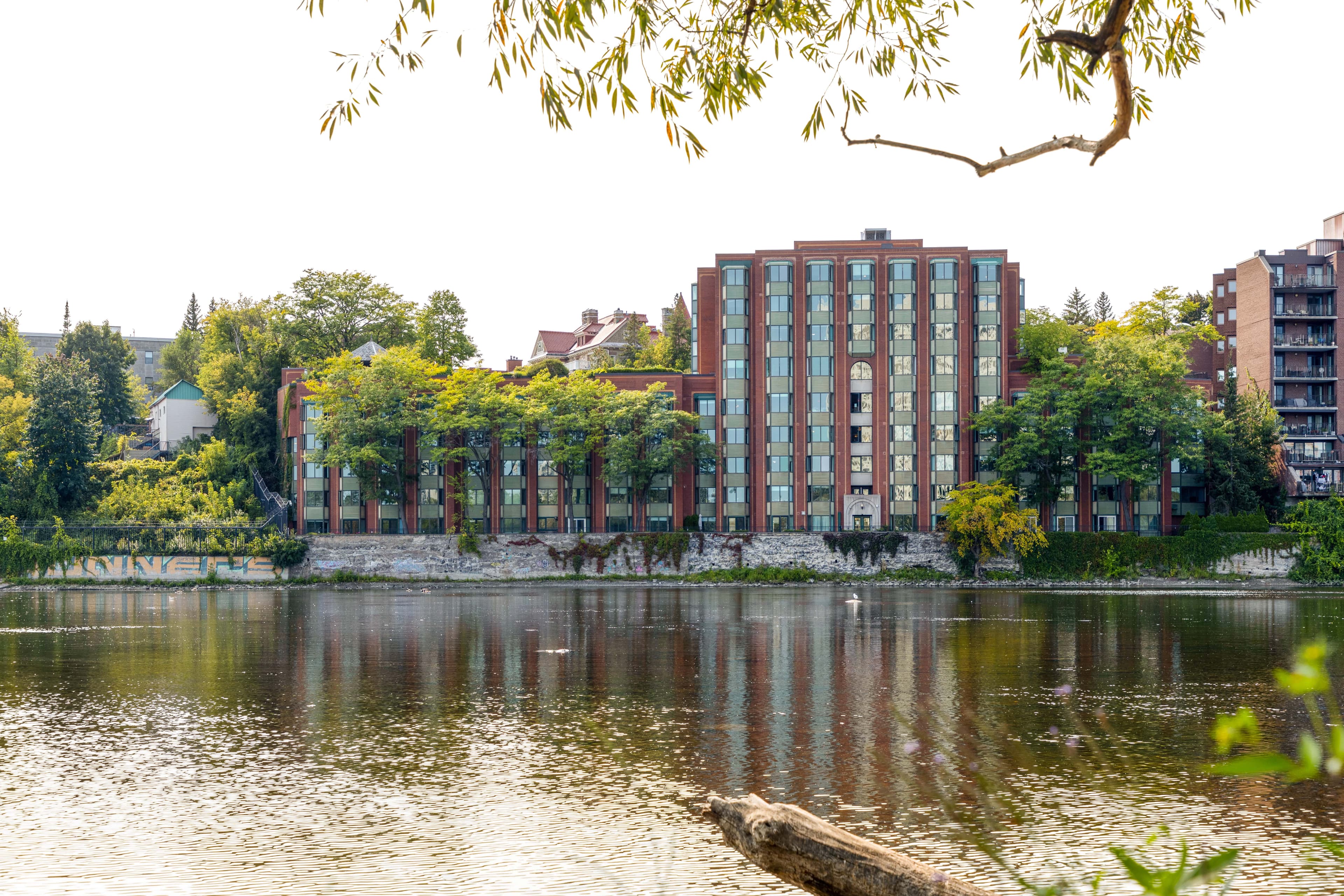
This is precisely the scenario purpose-built residences are built for. Riverflow Residences welcomes international students each intake at 550 Wilbrod Street, a 7-minute walk from the University of Ottawa — a verifiable address, a real leasing team, live video tours, a documented lease, and furnished suites so you arrive to a home rather than an empty room and a furniture problem in week one.
Book the process, not the promise. Verify the address, insist on a live tour, know the deposit rule, refuse untraceable payment, and get it in writing. Do those five things and booking from abroad stops being a leap of faith.
Riverflow Residences welcomes students of every background. We rent on the basis of housing fit and availability, in full compliance with the Ontario Human Rights Code. 'International student' here describes study status only. This post is general guidance, not legal advice.