Room rentals are among the most-targeted listings for rental fraud in Ottawa, and students are the favourite mark — new to the city (or the country), searching under time pressure, and often booking sight-unseen. The good news is that nearly every scam follows one of a few recognisable scripts, and once you know the patterns, they're hard to miss. This post covers the specific 2026 Ottawa scam patterns, the exact red flags, how to verify before you pay, and what to do if you've already been caught. (For the broader step-by-step of renting a room safely, see the 10-step room-rental safety checklist; this post goes deeper on detection specifically.)
The scam patterns actually running in 2026
The ghost listing. The dominant Ottawa pattern. Scammers scrape photos and descriptions from legitimate listings — Airbnb, real-estate sites, other rentals — and repost the unit at a drastically lower price to attract budget-conscious students. The unit may be real; the person advertising it has nothing to do with it. The low price is the bait.
The absent landlord. The scammer poses as a professional landlord who is "currently working abroad" or "dealing with a family emergency" and therefore can't show the property in person. They offer to courier you the keys — after you wire a deposit. There are no keys.
The manufactured-urgency close. "Three other students are interested, send $500 today to hold it." The pressure is the product; it exists to stop you from verifying before you pay.
The over-eager landlord who asks for nothing. A real landlord wants references, proof you can pay, some assurance. A scammer wants your money and asks almost nothing about you, because they're not actually screening a tenant.
The red-flag checklist
Any one of these should stop you cold. Two or more, and you're almost certainly looking at a scam:
- A price far below market. Sandy Hill rooms run roughly $650-$980; a beautiful central room at $450 isn't a lucky break, it's bait.
- Pressure to pay by wire transfer, e-transfer to an unverified person, gift card, or cryptocurrency. Untraceable, unrecoverable payment is the single clearest scam signature.
- A landlord who can't — or won't — show the unit, in person or by live video, citing travel or emergency.
- Manufactured urgency — a demand to pay immediately to "secure" the room.
- Photos that don't match the building at the listed address, or the same photos appearing on multiple sites under different names.
- A landlord asking almost nothing about you — no references, no proof of income, no screening.
- A deposit demand you cannot match to the rules — ask what the amount is called and what it is for, then check it on Steps to Justice; a request that fits nothing described there is a signal in itself.
- Communication that stays entirely online and resists any phone or in-person contact.
How to verify before a dollar moves
Detection isn't just spotting red flags — it's actively proving the listing is real. Four checks:
1. Match the address to the photos. Put the street address into a map with satellite and street view. Does the building at that address match the listing photos? Does the neighbourhood? Ghost listings fail this test because the photos belong to a different property.
2. Reverse-search the images. Drop the listing photos into a reverse image search. If the same pictures appear on an Airbnb listing, a real-estate sale page, or rentals in other cities, you've found a scrape.
3. Demand a live viewing. In person if you can; a live video call if you're remote — one where you can ask the person to walk to the window, show the unit number, or point the camera where you choose. A recorded walkthrough can be faked; a live, interactive tour is very hard to fake. Refusal to do any live viewing is, by itself, close to disqualifying.
4. Verify the person. Search the landlord's name and phone number for reviews or complaints. If you're renting a room in a house, it's reasonable to ask for proof they own or manage it. Confirm you're paying a named individual or business that matches who you researched.
Pay safely — the step where money is actually lost
Even a real listing can go wrong at payment. Rules that hold every time:
- Never pay by wire transfer, gift card or cryptocurrency. No legitimate Ottawa landlord needs any of them. This is the brightest line there is.
- Never pay to "hold" a place you haven't verified. Verification comes first, always.
- Money moves after a signed lease, not before. If there's no written agreement, there's nothing to pay for yet.
- Pay a named, verified recipient by a traceable method, and get a written receipt for every payment.
- Check the deposit before you pay it. Ask what each amount is called, what it will be applied to and whether it is refundable, then read Ontario's deposit and interest rules on Steps to Justice. A demand you cannot match to anything there is a red flag in its own right.
What to do if you've already been scammed
If you paid and the "landlord" has gone quiet, act quickly:
- Contact your bank or e-transfer provider immediately. Fast action occasionally allows a transfer to be stopped or reversed — every hour counts.
- Report to the Canadian Anti-Fraud Centre and to Ottawa police. Reporting builds the case and can help others, even when recovery isn't possible.
- Report the listing to the platform it appeared on so it can be removed.
- Warn your networks — student groups, your university's housing office, classmates. Scammers reuse the same listings on the same channels.
- Keep every record — messages, receipts, the listing, the profile. Documentation is what any investigation runs on.
And if you're an international student, your university's housing and international offices are a resource, not a last resort — reach out early rather than after money is gone.
The lowest-risk path of all
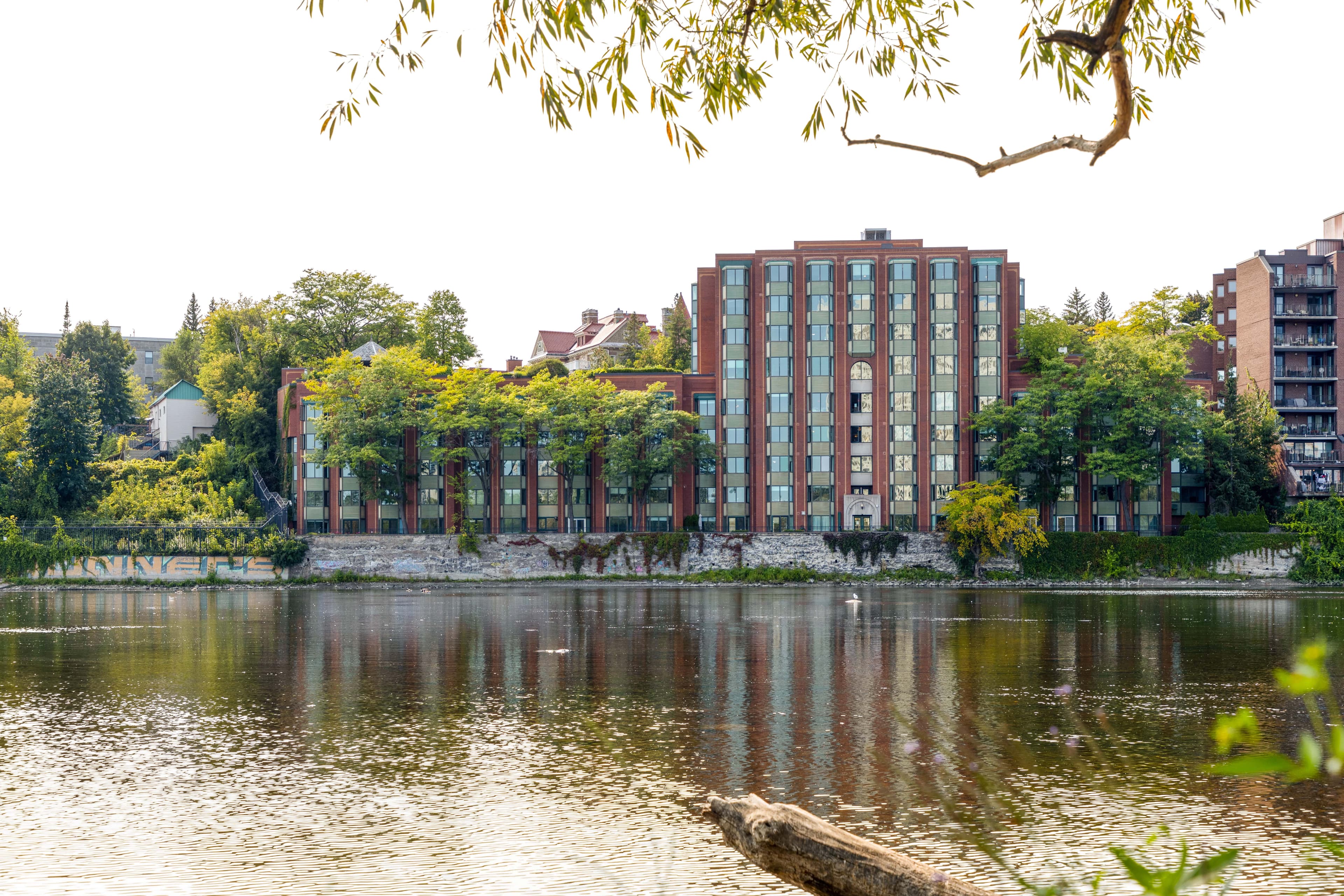
Every step above exists because renting a room from an individual puts the entire burden of verification on you. Some students would rather remove the risk category entirely — a verifiable address, a real leasing team, a documented lease, and no chance of a ghost listing. That's what a professionally managed residence offers by design. Riverflow Residences rents self-contained furnished studios and one-bedrooms (not shared rooms) at 550 Wilbrod Street in Sandy Hill — a real, checkable address, secure entry, live tours and a written lease, a 7-minute walk from uOttawa. It costs more than a shared room, and it removes an entire class of risk.
Whichever route you take, verify first and pay last. The students who get scammed almost never miss every warning sign — they see one, feel the time pressure, and pay anyway. Slow down at the payment step, and the scripts fall apart.
Riverflow Residences welcomes all students and residents, in full compliance with the Ontario Human Rights Code. This post is general guidance, not legal advice — report suspected fraud to the Canadian Anti-Fraud Centre and local police.