Our guide to what's usually included in an Ottawa room rental tells you which lines to ask about. This post is the other half: what each of those lines actually costs per month in Ottawa, how far the winter swing moves the total, and what happens to the gap between a cheap room and an average one once both are itemised.
The short version: the gap closes, and the part that does not close is the part you cannot budget.
Hydro, properly explained
Electricity is the line that generates the most confusion, because an Ottawa bill has three parts and the advertised cent-per-kilowatt-hour figure is only one of them.
Supply. Ontario's Regulated Price Plan rates set on 1 November 2025 are 9.8¢/kWh off-peak, 15.7¢ mid-peak and 20.3¢ on-peak under time-of-use; 12.0¢ up to the monthly tiered threshold and 14.2¢ above it under tiered; and 3.9¢ overnight against 39.1¢ from 4pm to 9pm under Ultra-Low Overnight. The OEB's next scheduled adjustment is 1 November 2026 — check its site for the current figures rather than trusting a cached page.
Delivery and regulatory charges, then HST, then the Ontario Electricity Rebate credited back. These are where Ottawa-specific changes land: for 2026 the Ontario Energy Board approved a Hydro Ottawa distribution increase of $5.87 a month, retroactive to 1 January, plus a further $1.80 a month until 31 May 2027 because the approval was delayed. The utility had asked for $6.08 and the OEB cut it on affordability grounds, trimming the proposed operating budget by $11 million.
Two things to hold onto. That $5.87 is a distribution increase, not your bill — it is the change, not the total. And the OEB's benchmark is a typical residential customer at 750 kWh a month, which is a house-shaped assumption, not an apartment one.
There is no official average apartment bill for Ottawa. Secondary guides offer $65 to $180 a month, with methodology unstated. That is a wide enough band to be nearly useless for budgeting, which is exactly the point: ask the landlord for a sample January bill for the actual unit. A landlord who has one will show you. A landlord who will not is telling you something.
Heat, and why January is the test
If heat is included in the rent or the household is on gas with the cost bundled, this line behaves. If the room has electric baseboards billed to you or shared by meter, winter is where a cheap room becomes an expensive one.
Ottawa's January normals (1991–2020) are an average high of about −5.2°C and an average low of about −14°C. It is the coldest month, and the heating load is not a rounding error on a bill.
One protection worth knowing: Ottawa's Heat By-law 2010-210 requires a minimum of 20°C between 6am and 11pm and 16.67°C (62°F) between 11pm and 6am. That is a floor the landlord must meet — relevant when the cheap room comes with a thermostat you do not control, and enforceable through 311 alongside any tenancy route.
The other lines, priced
| Line | Realistic Ottawa monthly cost | Notes |
|---|---|---|
| Internet (~100 Mbps) | $35–$50 reseller; $60–$80 national carrier | Ottawa average-bill estimates sit in the $50s–low $60s; promotional rates revert sharply |
| Shared coin or card laundry | $20–$40 | In-suite laundry removes the line entirely |
| Tenant insurance | $15–$40 | Often a lease requirement; Ontario estimates from non-official sources, so get two quotes for your actual address |
| On-street parking permit | $35 summer / $163 winter / $750 annual, plus HST | City of Ottawa rates published for 1 January 2024; the 2026 budget signalled increases, so confirm current fees. Only available if you have no access to off-street parking |
| Furnishing a bare room | $150–$300 one-off | Bedding, basic kitchenware, a lamp, a desk chair worth sitting in |
| Winter kit | one-off, price it yourself | Parka, insulated boots, layers — no credible source prices this for you |
The worked example
Two listings, both near the university. Listing A: $750 plus utilities, room in a four-person house with electric baseboard heat, shared basement laundry. Listing B: $950, itemised inclusions — heat, hydro, water and internet named in writing, laundry in-suite.
Listing A's hydro share: using the mid-point of that secondary $65–$180 band for a household, scaled to a January load and divided four ways, roughly $55 per person in January and roughly $23 in June. That is a band, not a figure — it is the reason this exercise exists.
| Line | Listing A — January | Listing A — June | Listing B |
|---|---|---|---|
| Advertised rent | $750 | $750 | $950 |
| Hydro and heat share | $55 | $23 | included |
| Internet share (of $60, ÷4) | $15 | $15 | included |
| Laundry | $25 | $25 | in-suite |
| Tenant insurance | $20 | $20 | $20 |
| Real monthly total | $865 | $833 | $970 |
The advertised gap was $200. In January it is $105. In June it is $137. Over a term it averages out to well under half what the listings implied — and Listing B is the only one of the two you can put in a budget and leave there.
Parking is the line that can invert any comparison. A winter on-street permit at $163 plus HST is larger than the entire gap above. If you have a car, settle parking before you compare anything else; if the building has none and the street is permit-only with a waiting list, that is a housing decision, not a detail.
What this means for how you shop
The pattern repeats across the market: the cheapest headline rents carry the most exclusions, and once itemised the true totals converge. Our Ottawa room rental prices guide sets out the headline ranges by area; this post is why you cannot shop on them alone.
Three habits follow.
Ask for the bill, not the estimate. A sample January statement for the specific unit beats any range, including the ranges above.
Get inclusions named in the written agreement, utility by utility. "Utilities included" is not a term; "heat, hydro, water and internet included" is. A bundled figure nobody will itemise should not be accepted from any landlord.
Compare totals, never rents — and compare January totals, because that is the month that decides whether the budget was real. If you are splitting a unit, agree the utilities method at the same time as the rent; our guide to splitting rent fairly with roommates, published alongside this post, covers that arithmetic.
Once the exercise is done a few times, some students start pricing a self-contained unit against a room, because a private kitchen and bathroom collapse several variable lines into one. Our room rental versus studio cost comparison runs that properly.
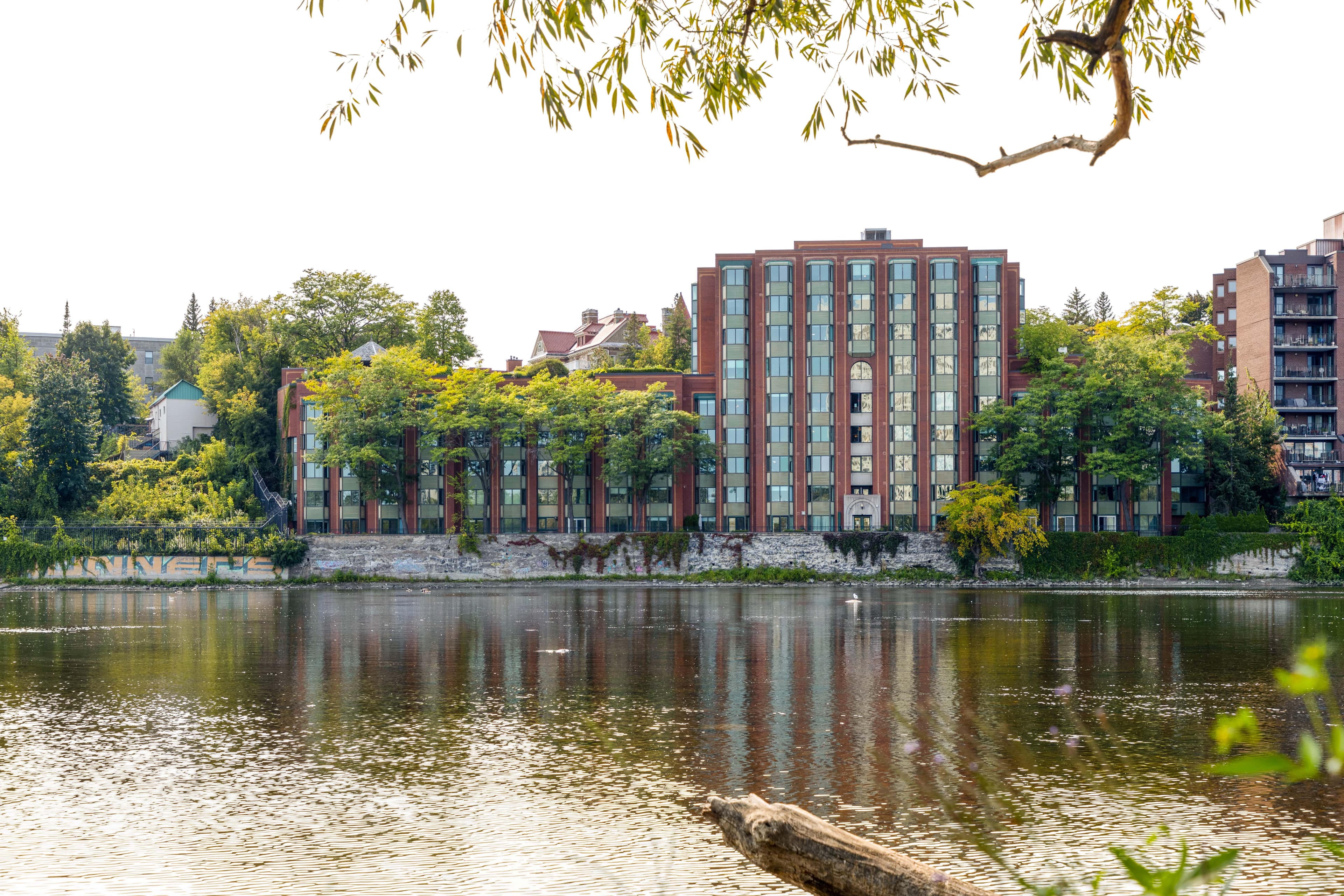
Riverflow Residences leases furnished self-contained studios and one-bedrooms — not rooms — at 550 Wilbrod Street in Sandy Hill, seven minutes' walk from uOttawa. We are not asking to be exempt from the test in this post: some items are billed separately here as at any building, so ask our leasing team which ones, for your specific tier, and get the list itemised in writing before you sign. If an operator will not do that — us included — treat it as the answer.
Riverflow Residences welcomes all students and residents in full compliance with the Ontario Human Rights Code. Utility, insurance, internet and parking costs vary by unit, provider and consumption; the ranges here are drawn from the sources named, several of them non-official, and are not quotes. Verify figures for the specific property and provider you are considering.