Room rentals are the least documented part of Ottawa's housing market and the part students use most. Purpose-built apartments get surveyed by CMHC; whole units get tracked monthly by national rent reports; rooms in shared homes get almost nothing. Yet a room is the entry price of living near a downtown campus, and tens of thousands of Ottawa residents rent one.
This report assembles what data does exist into a single picture of the Ottawa room market in 2026: what rooms cost by neighbourhood, which way prices are moving, how demand cycles through the year, what the furnished premium is worth, and how much of the market includes utilities. It is analysis rather than a listing service — we do not aggregate or broker listings — and it is written to be cited.
Headline findings
- Room rents in Ottawa were flat year-over-year as of July 2026, and down roughly 3.5% month-over-month — the clearest break from the 2023-2025 upward trend.
- The citywide room market spans roughly $650 to $1,300 a month, with the middle of the market for a room within walking distance of uOttawa sitting around $800-$850.
- The wider rental market softened alongside it. Ottawa's average asking rent across all property types fell 2.4% year-over-year to $2,145 in July 2026, against a national decline of 4.0%.
- Vacancy rose from about 2.0% to 2.7%, with roughly 2.5% forecast through 2026.
- The slack is concentrated near campuses. CMHC found vacancies highest in buildings completed after 2020 and in units near post-secondary institutions — while older, larger, family-sized stock stayed tight. The classic student house share is the segment that has not loosened.
- Utilities inclusion remains the single largest hidden variable, capable of swinging true monthly cost by $20-$50 in a shared house and considerably more in a solo unit through an Ottawa winter.
Methodology and scope
Room-level data is compiled from listing platforms — Zumper, Roomies, Kijiji, Rentals.ca and PadMapper — reflecting asking prices for individual bedrooms in shared homes and apartments, retrieved August 2026. Whole-unit and citywide figures come from the Rentals.ca / Urbanation National Rent Report (August 2026), CMHC's 2026 Mid-Year Rental Market Update, Zumper rent research and RentHop neighbourhood data.
Two caveats a serious reader should hold. First, room listings are self-reported and unstandardised: a "room" may be a bedroom in a five-person house or half of a shared bedroom, and the data does not always distinguish. Second, listing data measures asking prices for currently available rooms, not what sitting tenants pay — the latter is almost always lower.
Prices by neighbourhood
| Neighbourhood | Typical room range (2026) | Commute to uOttawa | Character |
|---|---|---|---|
| Sandy Hill | $700-$1,300 | 5-15 min walk | Densest student market; walkable to main campus |
| ByWard Market / Lowertown | Upper central range | 5-15 min walk | Highest surrounding apartment rents in the core |
| Centretown / Downtown | $680-$1,175 | 15-25 min walk / short O-Train | Urban core, mixed student and professional |
| Vanier | $730-$1,050 | Short bus or bike | Value option close to downtown |
| Old Ottawa South / Glebe | Upper end | Transit or bike | Quieter, Carleton-leaning, graduate-heavy |
| Nepean / suburbs | Cheapest citywide | 30-45+ min transit | Lowest rents, highest commute cost |
Two structural features stand out.
Sandy Hill is the anomaly. It is the most convenient neighbourhood for uOttawa's main campus and it is not the most expensive in the central core — ByWard and Lowertown carry higher surrounding apartment rents. That combination is why Sandy Hill absorbs the majority of uOttawa's off-campus demand every year, and why its room prices are the effective benchmark for the whole student market.
The suburban discount is smaller than it looks. A room in Nepean may list several hundred dollars below Sandy Hill, but a 30-45 minute each-way transit commute costs time every day and, in an Ottawa February, costs something harder to quantify. For students with the U-Pass bundled into ancillary fees the direct fare saving is nil, which narrows the case further.
For a fuller neighbourhood-by-neighbourhood walk-through, see our Ottawa room rental prices guide.
The trend: what changed in 2026
The defining data point of this report is that Ottawa room rents were unchanged year-over-year as of July 2026, and down about 3.5% month-over-month.
Set that against context. Through 2023 and 2024, room rents near uOttawa climbed steadily on the back of enrolment growth and constrained supply. Sandy Hill rents were still posting modest year-over-year gains through mid-2026 at the apartment level. But at the room level, the climb has stopped.
The whole-unit market tells the same story more loudly. Nationally, average asking rent was $2,037 in July 2026, down 4.0% year-over-year — the 22nd consecutive month of annual decline. Ottawa fell less, at -2.4% to $2,145, holding up better than Calgary (-4.5%) or Vancouver (-3.6%) but softer than Toronto (-0.6%).
| Market | July 2026 average asking rent | Year-over-year |
|---|---|---|
| Canada (all types) | $2,037 | -4.0% |
| Ottawa (all types) | $2,145 | -2.4% |
| Ottawa rooms | Range $650-$1,300 | Flat |
What is driving it
Three forces, pulling in the same direction.
1. Supply arrived. Ottawa recorded its largest increase in new rental supply in nearly fifty years during 2025, and apartment completions in early 2026 tracked above the same period in 2025. Province-wide, Ontario is delivering a record 6,313 purpose-built student housing beds in 2026 — roughly two and a half times the 2015-2025 annual average of 2,526. New purpose-built inventory does not compete directly with a room in a shared house, but it absorbs students who would otherwise be bidding for one.
2. Demand growth flattened. Canada's study permit framework now runs under a national cap, with IRCC expecting roughly 408,000 permits in 2026 and Provincial Attestation Letters still required for most college and undergraduate applicants. The enrolment surge that tightened the market in 2022-2023 has not repeated.
3. New units are taking longer to fill. CMHC's mid-year update reported operators waiting months to lease some new units, with vacancies concentrated in post-2020 buildings and near post-secondary institutions. Landlords of individual rooms compete against that inventory whether they want to or not.
The counter-trend worth knowing
Not everything loosened. CMHC was specific that older stabilised buildings and family-sized units continued to experience tighter conditions. In student terms: the four- and five-bedroom house share — the cheapest way to live near campus — sits squarely in the tight segment. The softening is happening above it, in newer and better-specified stock.
The practical implication runs against intuition. In 2026, the room market's bargaining power is at the higher end, not the lower end. A $1,100 furnished room with an ensuite in a newer building has competition; a $700 room in an older house does not.
Seasonality: the annual cycle
Ottawa's room market is one of the most seasonal rental sub-markets in the country, because it is driven almost entirely by an academic calendar.
| Period | Market condition | What a searcher faces |
|---|---|---|
| January - March | Research season opens | Best selection beginning to list; little pressure to commit |
| April - June | Peak commitment window | Strongest inventory; furnished and premium stock goes first |
| July - August | Thinning fast | Leftovers market; least choice, least negotiating room |
| September | Term begins | Scarcity peak; short-term and sublet options only |
| October - December | Quiet | Occasional mid-year vacancies; winter-start availability |
The single most valuable thing this seasonality tells you: price and choice move in opposite directions across the year. The cheapest listings often appear late, precisely because they are what nobody took — and the best-value listings, properly measured, appear in spring. Our guide on when to start looking for student housing in Ottawa maps the calendar in detail.
The furnished premium
Furnishing carries a consistent, measurable premium in the Ottawa room market: typically $80-$150 a month over an equivalent unfurnished room, with furnished rooms — some with private ensuite bathrooms — commonly listed around $780-$1,000 in the Sandy Hill area against a broader neighbourhood range starting near $700.
Whether the premium is worth paying is entirely a function of tenure. For an eight-month academic stay, buying a bed, desk, chair and lamp and then disposing of them in April rarely beats paying $100 a month for furniture that is already there. For a multi-year stay, unfurnished usually wins on total cost. The break-even sits somewhere around 12-18 months, depending on how thriftily you furnish.
At the whole-unit level the same premium is visible: furnished Sandy Hill rentals have listed from around $990 a month for a one-bedroom, against a Sandy Hill one-bedroom median near $1,649 and studio median near $1,499 — a spread wide enough that unit quality, not furnishing alone, explains much of it.
Utilities: the variable that decides real cost
The most consequential number in a room listing is often not the rent.
In a shared house, utilities split across four or five people typically add $20-$50 a month each. In a solo unit, an Ottawa winter can add $250 or more in the coldest months. That means an "all-inclusive $850" room can genuinely cost less than an "$800 plus utilities" room across a December-to-March stretch.
Utilities-included listings are a meaningful share of the Ottawa room market — all-inclusive private bedrooms have been advertised from around $595 — but inclusion is inconsistent and often partial. Heat may be included while hydro is not; internet may be included while water is not.
The discipline this market requires: normalise every listing to a total monthly cost before comparing. Ask which specific utilities are included, and ask what a typical January bill has looked like in that house. Landlords who have run the property for several years can answer that question; ones who cannot are telling you something.
For a benchmark table to score individual listings against, see our analysis of the average room rental cost near uOttawa.
What this means for renters in the year ahead
- Ask for terms. In a flat-to-falling market with new inventory taking months to lease, negotiation exists in a way it did not in 2023.
- Do not confuse flat prices with a slow calendar. The seasonality is unchanged. Softer prices with the same April-to-June commitment window means you should still search early — you will simply pay less than last year's cohort did when you do.
- Compare against a self-contained unit at the top of the room range. Once a room passes roughly $1,300, it sits within a few hundred dollars of a private studio with its own kitchen and bathroom, and the core advantage of a room — its low price — has largely gone.
- Read the market's split. If you want the cheapest possible room in an older house share, expect competition. If you are shopping the newer, furnished, near-campus end, expect choice.
Outlook
CMHC's mid-year assessment framed the current softness as a phase rather than a new baseline: completions surged and demand slowed simultaneously, and both are cyclical. The 2026 PBSA record reflects projects financed years ago, and the pipeline beyond 2027 thins as financing costs bite.
Base case: continued mild softness into early 2027 concentrated in newer near-campus stock, with older and larger shared houses staying tight. Students planning multi-year stays should not assume 2026 pricing persists.
Disclosure and citation
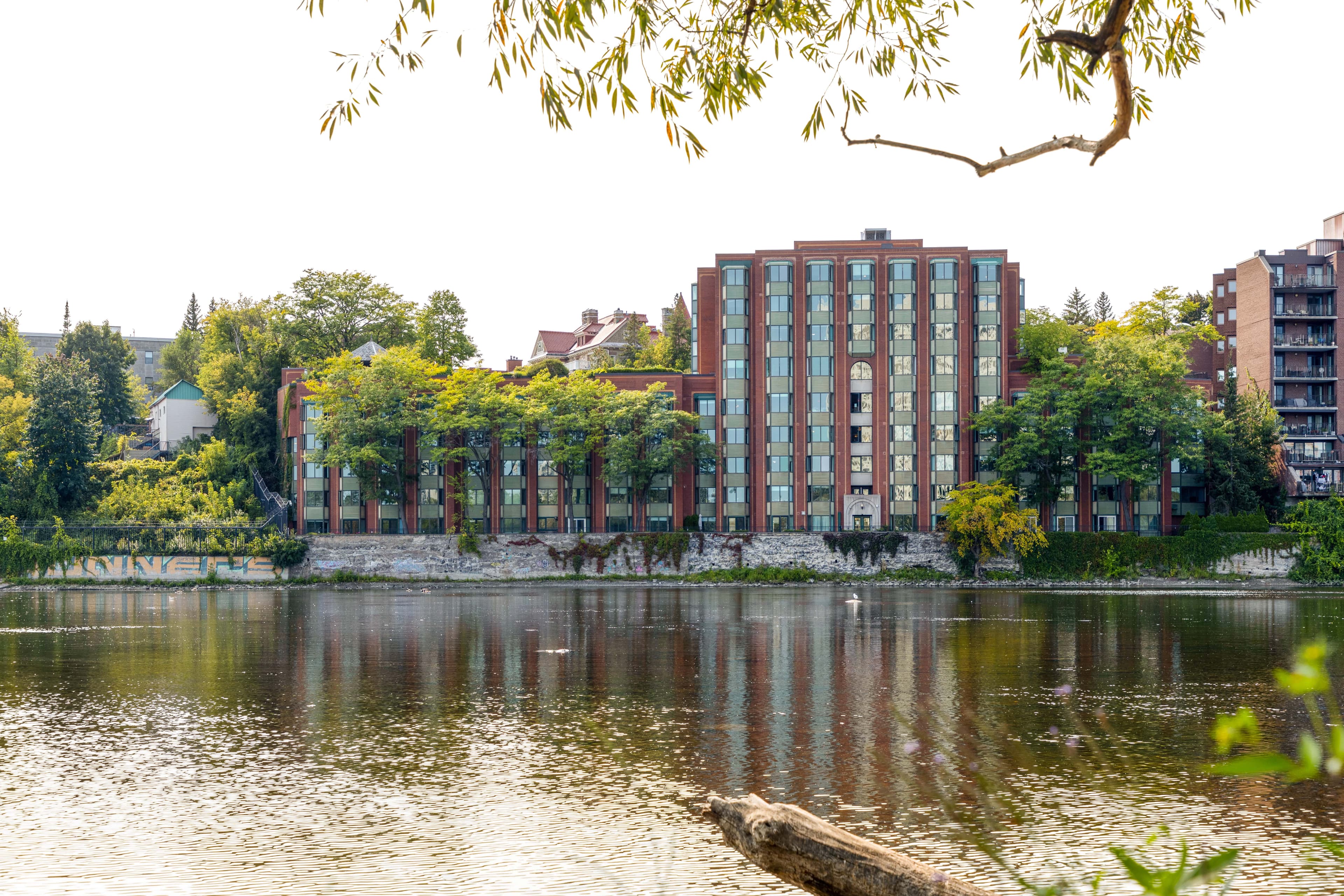
This report is published by Riverflow Residences, a furnished residence at 550 Wilbrod Street in Sandy Hill. To be clear about our position in this market: we rent self-contained furnished studios and one-bedrooms from $1,400 a month — not rooms in shared houses. We are an alternative to a room, not a room listing, and the top of the room range analysed above is the segment we compete with. We have reported the data as we found it, including the parts that make the case for a cheaper room share.
Cite as: Riverflow Residences, "The 2026 Ottawa Room Rental Market Report: Trends, Prices & Demand," 10 August 2026.
Riverflow Residences welcomes all renters in full compliance with the Ontario Human Rights Code. Figures are researched market ranges current as at August 2026 — confirm asking prices when you search.