Most students work this out backwards. They find a place they like, check the rent against what's in the bank, and only discover in November that hydro, groceries and a phone plan quietly ate the margin. A housing budget isn't the rent number — it's the rent number plus everything the rent number triggers. This post gives you the real 2026 ranges by housing type, then walks a full monthly budget line by line, so you can size your ceiling before you start booking viewings.
Start with the ceiling, not the listing
The useful order is: work out what you can sustain each month, subtract the non-rent essentials, and let what's left define which housing type you shop in. Do it the other way round and you'll fall for a place at the top of your range and spend the year absorbing the difference.
For context on the market you're budgeting into: the average rent across Ottawa sat at roughly $2,150 a month in July 2026, about 10% above the national average. That's the all-housing-types figure and it's not what a student pays — but it tells you the water level. Encouragingly, the city's vacancy rate has risen to about 2.7%, up from 2.0%, on the back of the largest increase in new rental supply Ottawa has seen in nearly fifty years. More supply is mild good news for anyone searching this year.
Real 2026 rent ranges by housing type
Here is what each rung of the ladder actually costs near uOttawa in 2026:
| Housing type | Typical 2026 monthly rent | What you get |
|---|---|---|
| Room in a shared house/apartment | $650-$980 (Sandy Hill typical; up to ~$1,300 for premium/ensuite) | Your own bedroom; shared kitchen and bathroom |
| Shared apartment (your share) | $840-$860 commonly listed | A room in a smaller, often newer unit |
| Private studio | ~$1,579 Ottawa average | Self-contained — your own kitchen and bathroom |
| Private one-bedroom | ~$1,945 Ottawa average | Separate bedroom and living space |
| On-campus residence | ~$16,400 all-in for 8 months (traditional double + mandatory 5-day meal plan) | Room plus a meal plan you can't opt out of |
Two things jump out. First, the gap between a room and a private studio is real but smaller than students expect — roughly $600-$900 a month, not double. Second, the on-campus number only looks competitive until you divide it: $16,400 across eight months is about $2,050 a month, and that's for a shared traditional double. We break that down fully in the uOttawa residence cost breakdown.
The line items students forget
Rent is the headline. These are the lines that decide whether the headline was affordable.
Utilities. The single biggest variable. A room advertised at $700 "plus utilities" typically adds $20-$50 a month when split across a house of four or five. Rent a studio or one-bedroom alone and you carry the whole bill yourself — which in an Ottawa winter is a different order of magnitude. Always ask what a January bill looks like, not an average.
Internet. If it isn't included, the average Canadian household pays $80-$95 a month, with the broader range running $50-$100. Budget plans start around $17/month. Split across housemates it's minor; carried alone it isn't.
Groceries. Plan $300-$400 a month per person, or roughly $65 a week if you cook most meals. This is the line with the most personal variance and the most room to control.
Transit — read this one carefully. Full-time students at uOttawa are automatically enrolled in the U-Pass, and the fee is already inside your compulsory ancillary fees. It gives unlimited OC Transpo bus and O-Train access and saves roughly $100-$130 a month versus buying passes. Two implications: don't budget a separate monthly transit line if you're full-time (you've already paid it through your student account), and note that it's charged in the fall term for the full September-April period, so it's a lump you feel at the start, not a monthly drip.
Phone. The average single-line Canadian plan runs $75-$85 a month. Student plans and lower-data tiers come in well under that.
The rest. Laundry if it isn't in-suite, renter's insurance, and — if you're taking an unfurnished place — a furniture spend that can run into four figures in month one.
A worked monthly budget
Here are two honest scenarios for a full-time uOttawa student, both assuming you're already covered for transit by the U-Pass:
| Line item | Room in a shared house | Private furnished studio |
|---|---|---|
| Rent | $850 | $1,400 |
| Utilities | $35 (split) | ask — varies by building |
| Internet | $25 (split) | ask — often bundled |
| Groceries | $350 | $350 |
| Transit (U-Pass) | $0 extra — in ancillary fees | $0 extra — in ancillary fees |
| Phone | $60 | $60 |
| Laundry | $25 | $0 if in-suite |
| Furniture (amortised yr 1) | varies — often $50-$100/mo | $0 — furnished |
| Rough monthly total | ~$1,345-$1,445 | ~$1,905+ |
That lands both scenarios inside the CA$1,500-$2,500 range commonly quoted for a single person living in Ottawa — and it shows the real spread between the two paths is closer to $400-$500 a month, not the $550 the sticker rents suggest. Once furniture, laundry and the utility lottery are priced in, the shared room's advantage narrows.
How to set your own number
Three rules that survive contact with reality:
- Budget the January bill, not the average bill. Ottawa's heating months distort everything. If you can afford your place in January, you can afford it in September.
- Count what's included as money, not as a perk. A furnished suite with in-suite laundry and bundled internet isn't "nicer" — it's several hundred dollars of line items already paid. Compare totals, not rents.
- Leave 10% of slack. Textbooks, a dental bill, a flight home. A budget with zero slack fails on the first surprise.
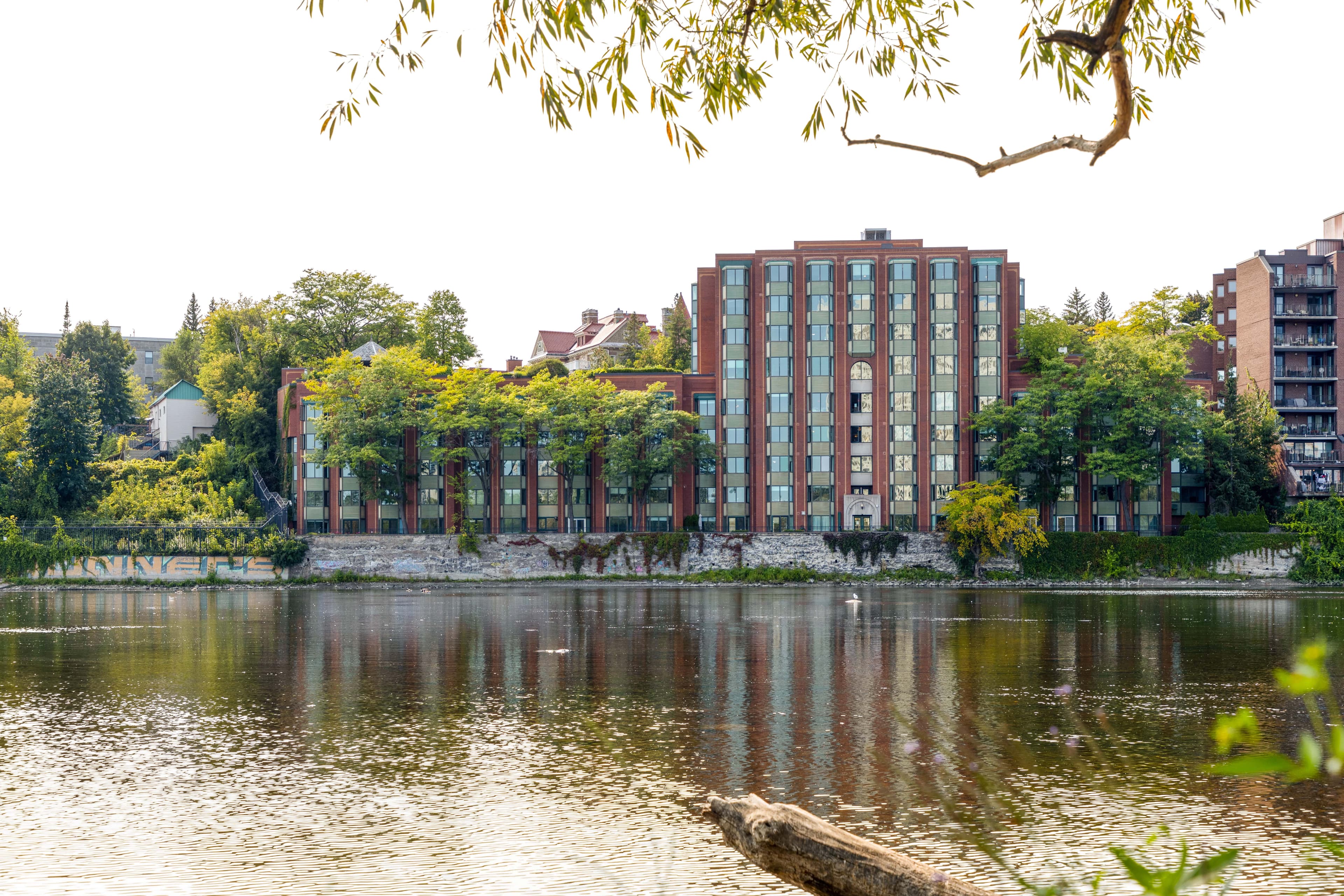
If your ceiling lands in studio territory and you'd rather have one predictable number than a stack of variable bills, that's exactly the trade a furnished residence makes. Riverflow Residences rents furnished studios and one-bedrooms from $1,400 a month at 550 Wilbrod Street, a 7-minute walk from campus, with furniture and in-suite laundry already in the number — ask on your tour exactly which utilities are included so you can slot the real figure into the table above rather than a guess.
Whatever you choose, do the arithmetic before the viewings, not after the lease. The students who overspend rarely picked the wrong building — they just budgeted the rent and forgot the rest. And once you know your ceiling, timing is the other half of the equation: see when to start your Ottawa housing search for the month-by-month calendar, and what a room near campus actually costs if the shared route is the one that fits.
Riverflow Residences welcomes all students. We rent on the basis of housing fit and availability, in full compliance with the Ontario Human Rights Code. Market figures are researched 2026 ranges — confirm current prices when you search.