Most "cheapest neighbourhoods" lists stop at the price. That is the easy half. The useful half is what the saving costs you — in travel time, in the age and condition of the housing stock, in what you give up getting home at eleven at night in February.
So this ranking does something different. For every neighbourhood it names the saving and prices it: how many extra hours of travel you buy for the money, over a thirteen-week term. If you are researching a January or next-year move, that is the number to decide on.
For the straight price-by-neighbourhood tables, we already have Ottawa room rental prices in 2026 and the average room cost near uOttawa. This post is the ranking and the trade-off.
How the numbers below work
On rents. CMHC does not separately survey individual room rentals, so there is no official room-level dataset for Ottawa. The bands below are indicative, assembled from listing observation, and should be treated as a sanity range rather than a quote. What is official: CMHC's October 2025 survey put Ottawa's average purpose-built rents at $1,299 for a bachelor, $1,559 for a one-bedroom and $1,793 for a two-bedroom, blended across sitting and new tenants. Market asking rents sit higher — rentals.ca reported an Ottawa average of $2,145 across all unit types in March 2026. Use those as the ceiling your room rate should sit well under.
On travel. The "extra hours per term" column assumes two one-way journeys a day, five days a week, over a thirteen-week term, compared against a seven-minute walk from Sandy Hill. Journey times are approximate and vary with route, time of day and weather — put your actual address into OC Transpo's trip planner before you sign anything.
The ranking
| Rank (cheapest first) | Neighbourhood | Indicative room band | Approx. one-way to uOttawa | Extra hours per 13-week term vs Sandy Hill | What the saving costs you |
|---|---|---|---|---|---|
| 1 | Nepean / Barrhaven / Riverside South | $550 – $800 | 45 – 60 min, transit | ~95 – 115 h | A working week and a half of travel per term; suburban evenings; car-shaped area |
| 2 | Alta Vista / Heron Park | $600 – $850 | 30 – 35 min, bus | ~50 – 60 h | Bus-dependent, limited late-evening frequency |
| 3 | Vanier / Overbrook | $650 – $900 | 15 – 25 min, bus or bike | ~25 – 30 h | Older stock, variable condition, fewer amenities on foot |
| 4 | Gatineau (Hull) | $650 – $900 | 25 – 40 min + river crossing | ~50 – 60 h | Quebec tenancy law, not Ontario's RTA; interprovincial transit transfer |
| 5 | Hintonburg / Mechanicsville | $700 – $950 | 25 – 30 min via O-Train Line 1 | ~40 – 45 h | Rail-dependent; rents rising with the area |
| 6 | Old Ottawa East / Ottawa South | $750 – $1,000 | 20 – 25 min, bike or bus | ~30 – 35 h | Quiet, Carleton-leaning, thin late transit |
| 7 | Centretown / Downtown | $800 – $1,100 | 20 – 30 min walk | ~25 – 30 h | Walkable but busy; small rooms in converted stock |
| 8 | Lowertown / ByWard Market | $850 – $1,150 | 15 – 20 min walk | ~15 – 20 h | Night-time noise near the Market core |
| 9 | Sandy Hill | $900 – $1,300 | 5 – 15 min walk | baseline | Nothing in time; you pay for it in rent |
What the trade-off actually looks like, neighbourhood by neighbourhood
Nepean, Barrhaven and Riverside South are where the cheapest rooms genuinely are, and the saving is real: $300 or more a month off a Sandy Hill rate. It buys you roughly a hundred extra hours of travel a term — the equivalent of two and a half working weeks sitting on a bus. The O-Train's Line 2 has improved the south-end picture: it runs 19 km from Bayview to Limebank across 11 stations, roughly every 12 minutes, with an end-to-end time OC Transpo put at about 36 minutes before launch. That helps if you live near a Line 2 station. It does not help if you live a feeder bus away from one, which is most of Barrhaven.
Alta Vista and Heron Park are the middle option nobody talks about: a genuine saving, a bus ride rather than a train, and a quieter residential setting. The weakness is evening frequency. Check what your route looks like after 22:00 on a weekday, and after 23:00 on a Friday, before you commit — a fifteen-minute daytime headway can become thirty.
Vanier and Overbrook are the best value-to-proximity ratio in the city for a student, and the honest caveat is stock age and condition rather than distance. Much of the rental housing is older, and the variance between a well-maintained unit and a poorly maintained one is wider here than anywhere on this list. Inspect properly: our inspection walkthrough exists for exactly this.
Gatineau looks like a cheap Ottawa neighbourhood on a map and is not one legally. Cross the river and you are under Quebec tenancy law and the Tribunal administratif du logement, not Ontario's Residential Tenancies Act and the Landlord and Tenant Board. Different rules on leases, rent increases and deposits. If you are new to Canada, that is a meaningful complication for a saving you can get in Vanier with less admin.
Hintonburg and Mechanicsville work if your life is organised around O-Train Line 1 and you value the neighbourhood itself, which many students do. The saving against Sandy Hill is modest and shrinking as the area gentrifies.
Old Ottawa East and Ottawa South are quiet, pleasant, and oriented toward Carleton rather than uOttawa. Excellent by bicycle in September and May; a different proposition in January.
Centretown buys you a walkable life at a modest discount, usually in a converted older building with small rooms. Measure before you sign.
Lowertown and the ByWard Market are near-campus and marginally cheaper than Sandy Hill, with a specific and well-known cost: the Market core is loud late, every night of the week, in a way that is charming for a term and tiring for a year. Two streets of distance changes it completely.
Sandy Hill is the most expensive on this list and the reason is simply that it is the closest. You are not paying for the housing — a lot of it is old student stock — you are paying for the walk.
Night-time journeys: the part to check yourself, factually
This is the variable students assess least and regret most, and it is best handled by observation rather than reputation. For any address you are seriously considering:
- Walk the final route at 23:00 on a weekday, on foot, before you sign. Not the daytime version of it.
- Check lighting continuity along that route — unlit stretches, underpasses, park paths, shortcuts you would actually take when tired.
- Check your route's real late frequency in the trip planner for 22:30 and 23:30 departures, including the transfer. A single missed connection at that hour is a thirty-minute wait.
- Note the distance from your stop to your door. The last four minutes matter more than the first forty.
- Check what is open and staffed on that route late: a 24-hour shop, a staffed lobby, a petrol station. Populated is different from empty.
None of that requires any judgement about an area. It requires you to walk it once at the hour you will actually be walking it.
How to decide
Put a number on your own hour. Take the monthly saving, divide it by the extra hours of travel it costs you per month, and you have your implied hourly rate for sitting on a bus. For many students the Barrhaven trade works out somewhere near minimum wage — at which point the question becomes whether you would rather have the hours or the money, which is a real question with no universal answer.
Then add the three things the table cannot price: whether you will keep attending early lectures in February, whether you will keep showing up to the clubs and the study groups that are near campus, and whether you want to spend the first week of a Canadian winter learning a two-transfer bus route.
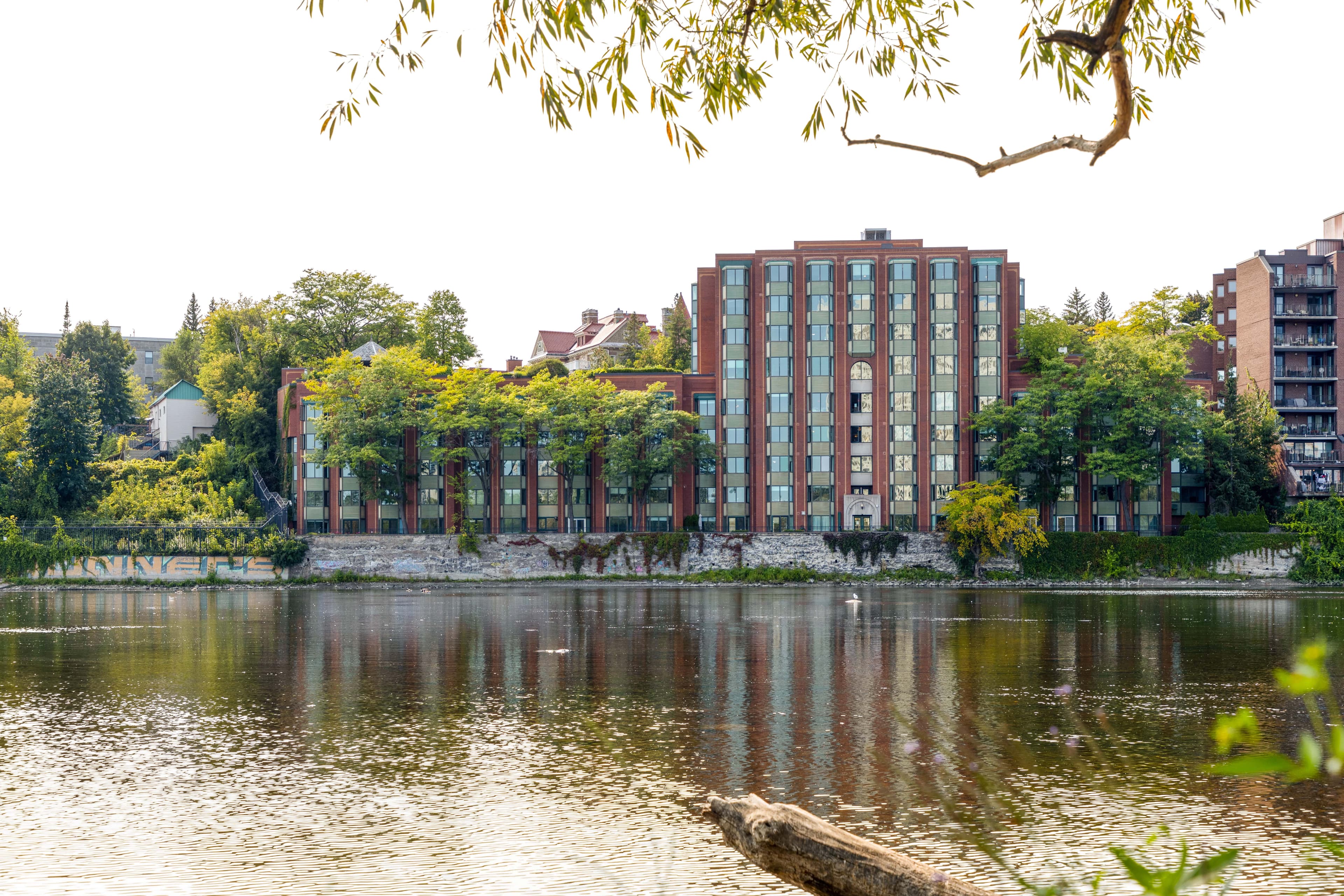
Riverflow Residences sits at the expensive end of this map on purpose — 550 Wilbrod Street in Sandy Hill, a seven-minute walk from uOttawa, with furnished self-contained studios and one-bedrooms from $1,400 to $1,920 per month. Note that we rent private studios, not rooms, so it is not a like-for-like comparison with the bands above; see the studio options. As with any listing, confirm on your tour what is included and what is billed separately — utilities and parking among them — and get it in writing.
Pair this with the room rental versus studio cost breakdown if you are weighing a cheap room against a self-contained unit, and with what's included in an Ottawa room rental before you compare any two rents at all.
Riverflow Residences welcomes all students and residents in full compliance with the Ontario Human Rights Code. Rent bands are indicative market observation, not quotes, and journey times are approximate — verify both for your specific address before signing.