You land, and within days you are expected to have a phone number, a bank account, a Social Insurance Number, health coverage, a transit pass, a completed registration and somewhere to live. Each of those depends on at least one of the others, and the order you do them in decides whether the week is manageable or miserable.
uOttawa's Starting Point orientation runs Monday 8 September 2026 and classes begin Tuesday 9 September. What follows is a sequence built backwards from that date, with the dependencies made explicit.
Before you fly
Carry your financial documents in your hand luggage. For study permit applications on or after 1 September 2025, IRCC's cost-of-living requirement is CAD $22,895 for a single applicant, separate from tuition and travel, and rising with accompanying family members. The figure is adjusted each 1 September. You may be asked to demonstrate funds at the port of entry.
Open a bank account before you arrive if you can. RBC and TD both allow international students to open an account from outside Canada; the others generally require you to be here. Doing this in advance removes a full day from your first week.
Book two to four weeks of temporary accommodation, not one night. Signing a twelve-month lease from another continent, sight unseen, is the single most expensive mistake in this whole process. Give yourself the room to view properly. Our guide to booking student accommodation before you arrive sets out what can safely be arranged in advance and what should wait.
Arrange an eSIM that activates on landing if you would rather not queue at the airport.
Day 0 — Arrival
You will land at Ottawa Macdonald–Cartier International Airport (YOW), or arrive by train at Ottawa Station if you flew into Toronto or Montréal.
At the port of entry you receive your study permit document. This is not the same as the introduction or approval letter you were emailed. Check the spelling of your name, the expiry date, and any conditions printed on it before you leave the counter — corrections are far easier at that moment than three weeks later.
Photograph the permit and your passport stamp. Store the images somewhere you can reach without your phone.
Get to your temporary base and sleep. Nothing else on this list improves if you attempt it jet-lagged.
Day 1 — Phone and transit
Phone first, because every subsequent step asks for a Canadian number.
Without Canadian credit history, a postpaid plan will typically require a deposit of roughly $50–$200. A prepaid plan requires no credit check, no contract and no exit fee, and student-oriented prepaid plans generally run about $25–$40 a month. Start prepaid; move to postpaid later once you have a credit footprint, if you want to. Worth knowing: from 12 June 2026, Canadian telecom providers can no longer charge activation, plan-change or cancellation fees, so switching later costs you nothing but the effort.
Then transit. OC Transpo runs the bus network and the O-Train; the U-Pass is a mandatory ancillary fee for eligible full-time uOttawa students and is loaded to your student card, giving unlimited travel on OC Transpo and on STO in Gatineau. It was $240.52 per term as of September 2025 — confirm the 2026-27 rate on the university's ancillary fees page. Until your card is issued, load a Presto card or pay fares directly.
Day 2 — Social Insurance Number
Go to a Service Canada Centre in person. Bring your passport and your study permit document, plus proof of your Ottawa address if you have it.
In person, with the documents in order, the appointment takes roughly 20 to 30 minutes and you leave with your SIN the same day. Applying online or by post takes considerably longer, and you cannot be paid by a Canadian employer without it.
Two points people get wrong: you need the permit itself, not the approval letter; and your study permit must carry the condition authorising you to work, otherwise the SIN application will not proceed.
Day 3 — Bank account
If you opened an account from abroad, this is the day you visit a branch to complete verification and collect your debit card. If you did not, bring your passport, study permit and proof of enrolment.
All five major Canadian banks offer no-fee student chequing with unlimited debit transactions. Several also offer a first credit card without Canadian credit history as part of a newcomer package — worth taking, because Canadian credit history is built by using a Canadian credit product, and you will want one before you next apply for housing. Some students arrive through a Student GIC programme, in which case the branch releases funds on a scheduled basis; confirm the current programme amount directly with your bank rather than relying on any figure you read online, as it is periodically restated.
If you are searching for housing without a credit file, our guide on renting in Ottawa without Canadian credit explains what a landlord may and may not ask for under Ontario Regulation 290/98.
Day 4 — University: registration, card, health coverage
Confirm your course registration in uoZone and clear any outstanding admission conditions. Collect your student card — it carries your U-Pass and campus access.
Health coverage. International students at Ontario universities are covered by the University Health Insurance Plan (UHIP), and uOttawa enrols eligible international students automatically once international status is assigned. For the policy year running 1 September 2026 to 31 August 2027, the rate rises to $79 per person per month, or $948 for the full twelve months — an increase of $156 on the prior year, with all published amounts including 8% tax. Students beginning in January 2027 pay $632 for eight months and those starting in May 2027 pay $316 for four. Families of three or more pay $2,844 for the year.
Carry your UHIP card, physically or on your phone. A walk-in clinic will ask for it.
Days 5–6 — Viewings and signing
By now you have an address for correspondence, a phone number, a bank account, a SIN and a student card. That is the complete document set most Ottawa landlords ask for, and it is why housing sits here rather than on Day 1.
Book three to five viewings in a single afternoon and see them back to back — comparison is far more informative than sequence. Before you commit, work through the documents international students need to rent in Ottawa so nothing stalls at the signing table, and read our international student's guide to renting in Ottawa for how Ontario tenancies actually work.
Two questions to ask before you view anything: whether you would share a kitchen or bathroom with the owner — that arrangement falls outside the Residential Tenancies Act entirely — and what the true monthly total is once anything excluded is added back.
Do not pay before you sign. In Ontario the deposit is at most one month's rent, applied to your last month; damage deposits and security deposits are not permitted.
Day 7 — Move in and update your address
Move, then update your address with IRCC, your bank, the university and your phone provider. Photograph every room and every existing defect on the day you take possession and email the set to yourself and the landlord. That is your move-in condition record, and it is the cheapest insurance in the tenancy.
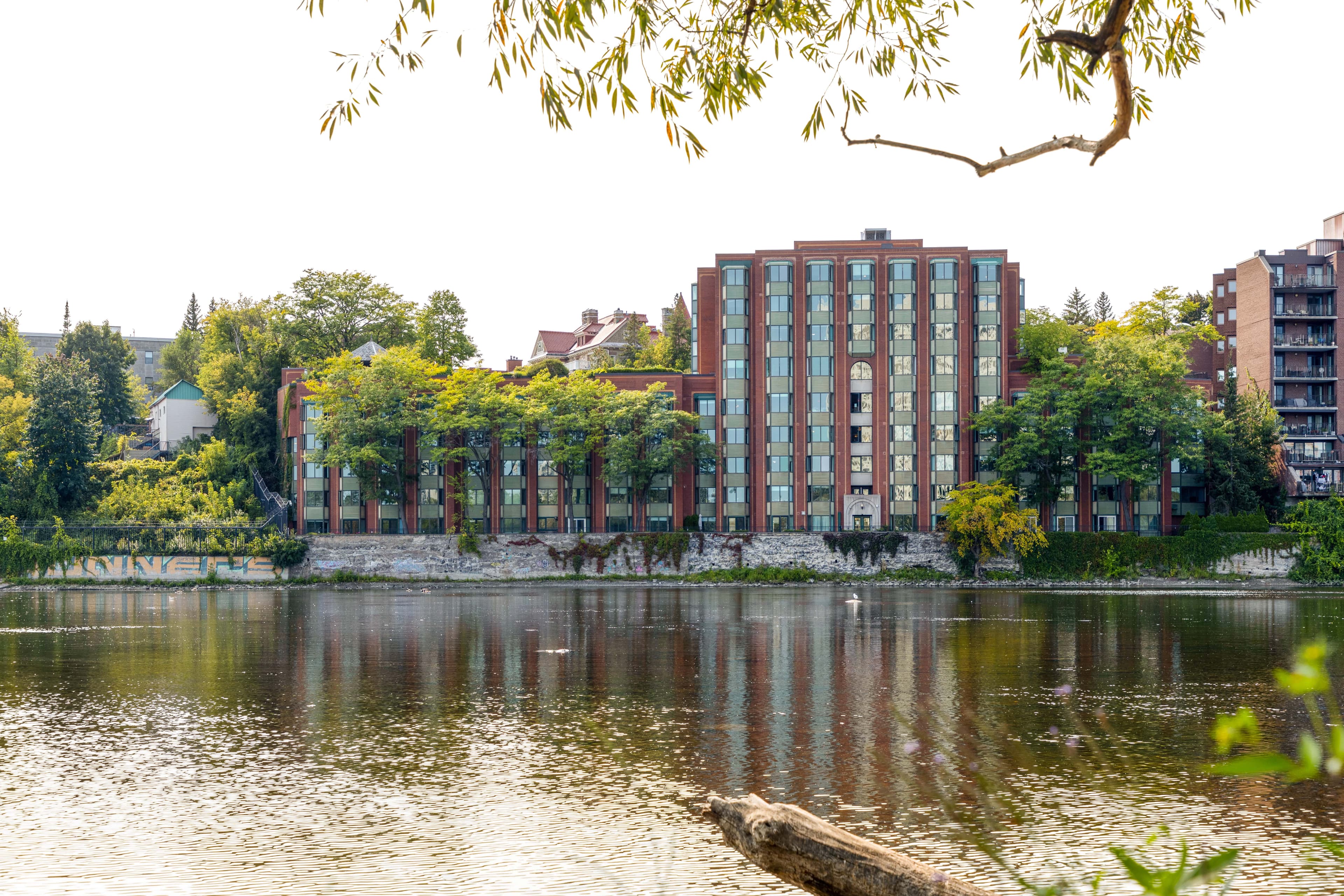
If a self-contained furnished unit suits the way you want to start the year, Riverflow Residences leases furnished studios and one-bedrooms at 550 Wilbrod Street in Sandy Hill, a seven-minute walk from campus, from $1,400 to $1,920 a month. Ask what is and is not included, and get it in writing before you sign.
Welcome to Ottawa. Do it in order and the week is entirely survivable.
Riverflow Residences welcomes all students and residents in full compliance with the Ontario Human Rights Code. This article is general information, not legal or immigration advice — confirm current requirements with IRCC, Service Canada and the University of Ottawa.