Renting in a country you have never lived in is a sequence problem. Everything depends on something else: you cannot get a study permit without proof of funds, you cannot open most Canadian bank accounts until you arrive, you cannot easily rent without Canadian references, and you cannot start school without somewhere to sleep. Most guides tackle one link in that chain. This one walks the whole chain, in order, from your acceptance letter to your first month living in Ottawa.
It is written for the 2026-27 intake and reflects the current federal rules. Immigration policy changes often — always confirm requirements on canada.ca before you act on any figure here.
The timeline at a glance
| When | What you are doing |
|---|---|
| 8-12 months before | Apply to your programme; receive letter of acceptance |
| 6-10 months before | School requests your Provincial Attestation Letter (if required) |
| 6-9 months before | Assemble proof of funds; submit study permit application |
| 4-6 months before | Build your Ottawa budget; begin researching housing |
| 3-5 months before | Shortlist and secure housing (January-June for a September start) |
| 1-2 months before | Sign lease; arrange arrival logistics; plan first-week purchases |
| Arrival week | Move in; bank account; phone; transit; health coverage |
| First month | Utilities if applicable; internet; settle housemate or building routines |
The single most important line in that table is the housing one. Ottawa's student leasing season concentrates between January and June for a September move-in. Waiting until you land is the most expensive mistake international students make here.
Stage 1 — Acceptance and the Provincial Attestation Letter
Your letter of acceptance from a designated learning institution (DLI) starts everything.
For most college and undergraduate applicants, you will also need a Provincial Attestation Letter (PAL) — a document from the province confirming you hold a place under its share of the national study permit cap. You do not apply to the province directly; the process runs through your DLI, which requests it on your behalf. Typical turnaround is two to six weeks.
One important 2026 change: as of 1 January 2026, master's and doctoral students enrolled at a public designated learning institution no longer require a PAL or TAL. If you are entering a graduate programme at the University of Ottawa or Carleton, this step likely does not apply to you.
Nationally, IRCC expects around 408,000 study permits in 2026, of which roughly 180,000 fall in the attestation-letter cohort. The cap is real, and it is the reason PAL timing matters.
Stage 2 — The study permit and proof of funds
How much money you must show
For applications submitted on or after 1 September 2025, a single applicant outside Quebec must demonstrate CAD $22,895 for living expenses for the first year, separate from tuition and return transportation. The figure scales with family size: $28,502 for two people, $35,040 for three.
The GIC question
The Student Direct Stream (SDS) closed on 8 November 2024, and with it the requirement that a Guaranteed Investment Certificate be part of your application. Under the regular study permit stream — now the only stream — a GIC is strongly recommended but not mandatory.
Most students still use one, for two good reasons. First, it is the cleanest possible evidence of funds: a Canadian financial institution holds the money and releases it to you in instalments after arrival. Second, it solves a practical problem — it gives you Canadian funds you can access in your first weeks, before your income or transfers are established.
Acceptable alternatives include bank statements showing funds held for roughly four consecutive months, a scholarship or sponsorship letter, or a combination.
Work, and why you should not budget on it
International students may work up to 24 hours per week off campus during academic terms, and full-time during scheduled breaks. That is real income, but treat it as a buffer, not as rent money. Job searches take time, and a lease signed on the assumption of income you do not yet have is a bad lease.
Stage 3 — Building an honest Ottawa budget
Ottawa is cheaper than Toronto or Vancouver, and more expensive than most students expect. Here is a realistic monthly frame for a single student in the uOttawa catchment:
| Line item | Monthly (CAD) | Notes |
|---|---|---|
| Housing — room in shared home | $650-$1,300 | Varies by neighbourhood; utilities may be extra |
| Housing — furnished studio | ~$1,400-$1,720 | Self-contained, own kitchen and bathroom |
| Housing — one-bedroom | ~$1,900-$1,995 | Citywide asking rents mid-2026 |
| Groceries | $300-$450 | Cooking for yourself |
| Phone | $35-$60 | Prepaid options are cheaper |
| Internet | $50-$80 | Often included in furnished residences |
| Transit | Included via U-Pass | Full-time uOttawa students pay through ancillary fees |
| Books, supplies, personal | $150-$300 | Varies enormously by programme |
Two Ottawa-specific notes. Winter heating is a real line item — a unit advertised at "$X plus utilities" can cost meaningfully more between December and March than the same unit looks in August. And the U-Pass matters: full-time uOttawa students receive unlimited OC Transpo and O-Train access bundled into compulsory ancillary fees, so transit is effectively prepaid.
For a full month-by-month build, work through our uOttawa student rent budget guide.
Stage 4 — Searching from abroad
This is the stage where the most money is lost, in two opposite ways: by rushing into a fraudulent listing, or by waiting until arrival and paying whatever is left.
Where to search. Purpose-built and managed student residences with their own websites; university off-campus housing resources; established listing platforms. Approach informal social-media groups with far more caution than you would at home — you cannot verify anything from 8,000 kilometres away.
What to verify before any money moves.
- Does the building or unit exist at the stated address? Check it on a mapping service and look at street-level imagery.
- Is the person you are dealing with a verifiable operator or agent, with a business identity you can look up?
- Are you being asked to pay via wire transfer, cryptocurrency, gift cards, or to a personal account abroad? All are red flags.
- Will they do a live video walkthrough of the actual unit, on request, showing the address?
The single non-negotiable rule: never send a deposit for a unit you have not seen, to a party you have not verified, through a channel that offers no recourse. Our guide on how to spot an Ottawa room rental scam covers the specific patterns targeting students here.
Why booking before arrival usually wins. Arriving without housing means a hotel or short-term rental at daily rates, a compressed search under jet lag, and whatever inventory is left in late August. Booking ahead means you land with an address, which you also need for your bank, your phone plan, and your student file. We set out the full case in booking student accommodation before you arrive.
Stage 5 — Documents and the guarantor question
Canadian landlords assess applicants on rental history, income and credit. As a new arrival you have none of the three in Canada. That is normal, and there are established workarounds — but you should arrive prepared rather than improvising.
Assemble in advance:
- Passport and study permit (or port-of-entry letter of introduction)
- Letter of acceptance / proof of enrolment
- Proof of funds — bank statements, GIC confirmation, or scholarship letter
- Reference letters from a previous landlord, if you have one
- A guarantor's details, if you are using one
On proof of funds for renting specifically: landlords commonly want to see coverage for roughly twelve months of rent. Bank statements held over about four consecutive months carry more weight than a single balance snapshot. The detail is in our proof of funds guide for renting in Ottawa and the full document checklist for international students.
On guarantors: a guarantor co-signs and becomes liable if you do not pay. Many Ontario landlords prefer a Canadian-resident guarantor. If you do not have one, the common substitutes are a larger demonstrated fund balance, a GIC, or prepayment arrangements — but be careful with the last one, because Ontario law limits what a landlord may lawfully collect (see the next stage).
Stage 6 — Signing: what Ontario law actually allows
This is the section most international students have never read, and it protects you.
The Ontario Standard Lease is mandatory. Since 30 April 2018, landlords must use the government's standard lease form for most residential tenancies. If you are not given one, you may request it in writing; if it is not provided within 21 days, you may withhold one month's rent.
Only one deposit is legal. The sole deposit an Ontario landlord may collect is a last month's rent (LMR) deposit, which can only be applied to the final month's rent — not to damage, cleaning, or anything else. A landlord must also pay you annual interest on that deposit at the rent increase guideline rate, which is 2.1% for 2026.
Anyone demanding "first, last and a damage deposit," or several months of rent up front as a condition of renting to an international student, is asking for something Ontario law does not permit.
Rent increases are regulated. For units covered by the guideline, increases are capped at 2.1% in 2026, require 90 days' written notice on Form N1, and may not occur more than once every twelve months.
Entry is regulated. A landlord must give at least 24 hours' written notice and may enter only between 8:00 a.m. and 8:00 p.m., for specified reasons.
Read the whole lease before signing, including the term length, what is included, and any additional terms appended to the standard form. If something in an appended term contradicts the Residential Tenancies Act, the Act generally prevails — but it is far easier to catch it before you sign.
Stage 7 — Arrival and move-in
Plan to arrive at least a week before classes, ideally two. You will need the time.
- At the port of entry, your letter of introduction is converted into your study permit. Keep your acceptance letter, proof of funds and accommodation details accessible, not packed.
- Getting to Ottawa: many students land in Montreal or Toronto and continue by train or bus. Build in a buffer day.
- The first 48 hours: confirm your move-in appointment and key collection in advance, and know who to contact if your flight shifts.
- What to buy on arrival: bedding, towels, kitchen basics if your unit has a kitchen, and cleaning supplies. In a furnished residence, the furniture question is already answered — check exactly what is provided before you buy anything bulky.
Stage 8 — Your first month: the setup checklist
- Bank account. Most major Canadian banks offer newcomer and student accounts, typically with fees waived. Bring your passport, study permit and proof of enrolment. If you hold a GIC, this is where your instalments arrive.
- Phone plan. Prepaid plans need no credit history and can be arranged the day you land; postpaid plans usually require a Canadian bank account and sometimes a credit check. Start prepaid, switch later.
- Transit. Full-time uOttawa students get the U-Pass through compulsory ancillary fees — confirm activation through your student account rather than buying a separate pass.
- Health coverage. International students at Ontario universities are generally covered by the mandatory university health insurance plan billed through your student account. Confirm your enrolment and know how to make a claim before you need to.
- Utilities and internet. If your lease makes you responsible for hydro, set up the account immediately — do not wait for a notice. If your residence includes utilities and internet, confirm exactly which ones in writing.
- Register your address with your institution and your bank, and keep a copy of your lease. You will be asked for proof of address more often than you expect.
A note on housing type
One thing worth deciding early: do you want a room in a shared home, or your own self-contained unit? A room is the lowest-cost option in Ottawa and suits students prioritising price. A private studio costs more but gives you your own kitchen, your own bathroom, and no housemate negotiation in your first year in a new country.
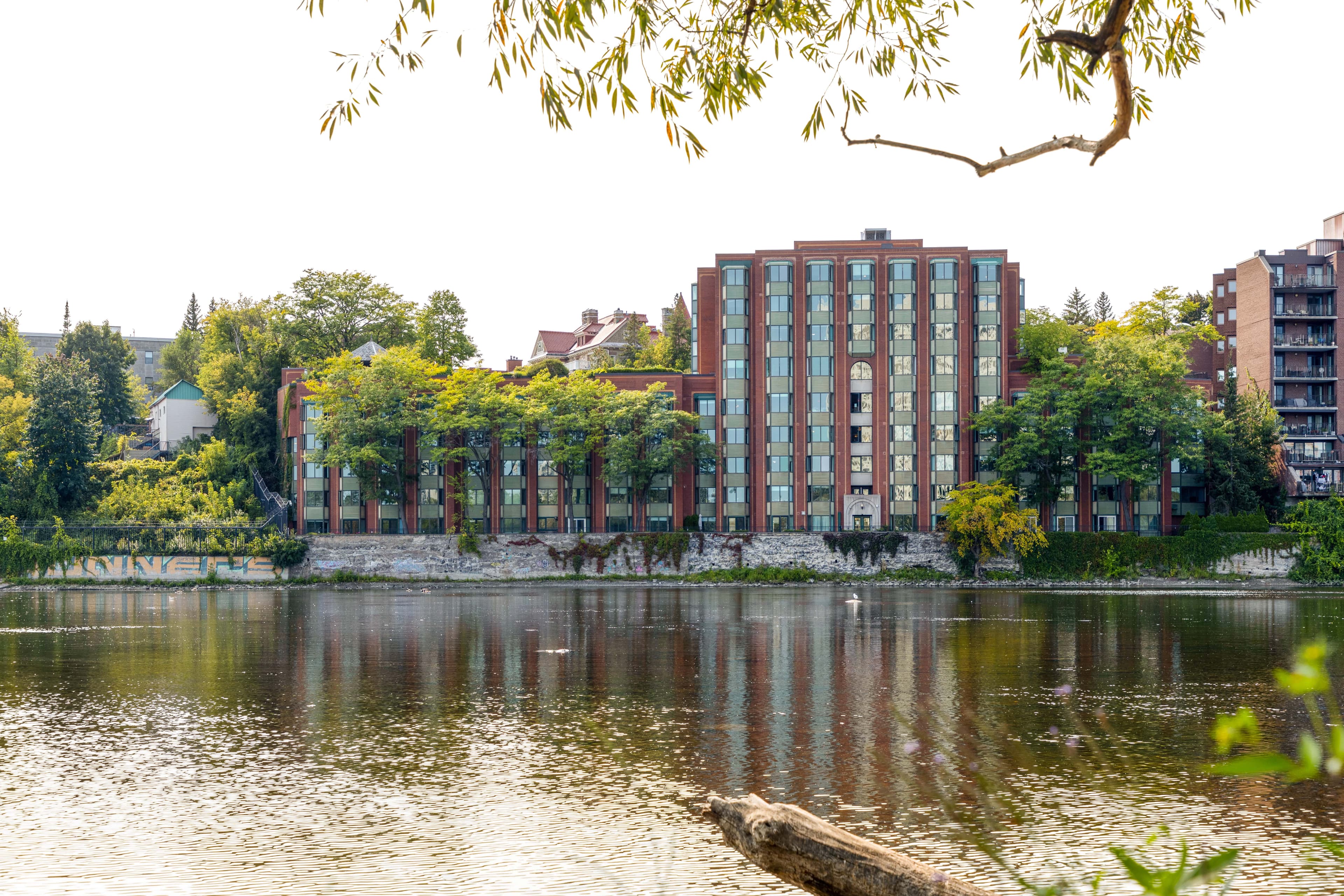
Riverflow Residences sits in the second category: furnished, self-contained studios and one-bedrooms at 550 Wilbrod Street in Sandy Hill, a seven-minute walk from uOttawa, from $1,400 a month. We rent private studios and one-bedrooms, not rooms in shared houses — worth knowing if you are comparing across both categories. For an international student arriving alone, the appeal is that the unit is furnished and move-in ready on day one, which removes the furniture problem entirely.
Whatever you choose, choose it before you fly. Ottawa's student housing calendar does not wait for arrivals.
Riverflow Residences welcomes all students in full compliance with the Ontario Human Rights Code. Immigration figures and rules are current as at August 2026 — always confirm on canada.ca before acting.