Almost everyone asks this question the wrong way round. They put a residence fee next to a monthly rent, notice that the rent is smaller, and stop there. The two numbers are not comparable. One of them is a bundle that forces you to buy a meal plan; the other is a rent that triggers a list of bills nobody mentions in the listing.
If you are weighing a move for the Winter term — researching now, deciding in November, moving in late December or early January — this is the arithmetic that should drive it. Here it is, worked, with the sources named and with the cases where off-campus genuinely loses.
The rule: same period, and count what each side forces you to buy
Two corrections make the comparison honest.
Compare the same number of months. A uOttawa residence agreement for the traditional buildings covers the academic year, roughly September to April. Most private leases in Ottawa run twelve months. Comparing a one-year rent against an eight-month residence fee makes residence look expensive for reasons that have nothing to do with the housing.
Count the forced purchases, not the optional ones. Residence forces a meal plan in most buildings. An unfurnished apartment forces furniture. Neither is a lifestyle choice you can opt out of once you have signed.
The on-campus side
uOttawa's published residence room fees span a wide range depending on building and room type — roughly $9,278 at the low end to about $20,464 for a room in a shared apartment at the Annex, with self-contained studios and one-bedroom apartments at 45 Mann and the Annex running considerably higher (a one-bedroom at 45 Mann is listed at $26,308 and a premium studio at the Annex at $27,304, both on a twelve-month basis). Those room costs include the $156 student resident insurance charge. A $1,000 residence deposit is payable to confirm the agreement.
Then the line that decides the whole question. For 2026–27, uOttawa's meal plans are priced at $7,125 for 5-day unlimited, $7,850 for 7-day unlimited, and $4,850 for pay-as-you-go, across the eight-month academic year. The 5-day plan is mandatory in residences without full in-suite kitchens — the traditional-style buildings — and optional where there is a kitchen in the unit.
That is the crux: in a mandatory-plan building, the meal plan is not an add-on to the rent. It is roughly comparable to the rent. Our breakdown of whether the uOttawa meal plan is mandatory works through which buildings trigger it.
A caveat you should carry into your own budgeting: the fee page these figures come from was last published for the preceding cycle, and residence rates are set annually. Confirm the current numbers with uOttawa Housing Services before you commit to either side of this comparison.
The off-campus side
The rent is the easy part. CMHC's October 2025 Rental Market Survey put Ottawa's average purpose-built rents at $1,299 for a bachelor and $1,559 for a one-bedroom — blended across sitting and new tenants, so a freshly signed lease typically sits above them. Market asking rents run higher again: rentals.ca reported an Ottawa average of $2,145 across all unit types in March 2026, with one-bedrooms averaging $1,955.
Now the lines the rent triggers:
Groceries. Canada's Food Price Report 2026 forecasts food prices rising 4% to 6% this year and projects a family of four spending about $17,572 on groceries — roughly $995 more than 2025. Divided four ways that is about $366 a month per person, and the report specifically flags Ontario as one of the provinces running above the national average. A student cooking carefully can come in under that; a student who cannot cook will come in well over.
Electricity and heat. The Ontario Energy Board approved a $5.87 monthly increase to Hydro Ottawa's distribution rates for 2026, with a further $1.80 a month added until 31 May 2027 because approval landed late. Third-party estimates for an Ottawa apartment land somewhere between $65 and $180 a month depending on size, insulation and whether heat is electric — a wide band, and one you should narrow by asking a prospective landlord for a sample winter bill rather than an average.
Internet, tenant insurance, and the things that are included in residence by default. Budget $0–$70 a month for internet depending on whether it is bundled, and $15–$30 a month for tenant insurance.
The U-Pass is a wash. It is mandatory for full-time uOttawa students either way, at $240.67 per term for Fall 2026, Winter 2027 and Spring–Summer 2027, up from $234.80 the year before. It does not belong in the comparison — but it does belong in your budget.
The eight-month table
| Line (Sept–Apr, per person) | Residence, traditional room + mandatory 5-day plan | Off-campus bachelor apartment |
|---|---|---|
| Room fee / rent | $9,278 – $13,000 (low-to-mid of published span) | $1,299 × 8 = $10,392 |
| Mandatory meal plan | $7,125 | — |
| Groceries | $0 forced; realistic top-up $100–$200/mo | ~$366 × 8 = $2,928 |
| Electricity / heat | included | $65–$180 × 8 = $520 – $1,440 |
| Internet | included | $0 – $560 |
| Insurance | $156 (in room fee) | $120 – $240 |
| Furnishing | included | $0 furnished / $700 – $3,000 unfurnished |
| Eight-month total | ≈ $16,400 – $20,100 | ≈ $13,960 – $15,560 furnished |
The low end of the residence column lands almost exactly where third-party listings put a traditional double room with the mandatory plan — about $16,403 for eight months, and roughly $18,733 for a single. That corroboration is worth something, because it was derived independently.
Verdict on a straight eight-month furnished comparison: off-campus comes out ahead by roughly $1,000 to $4,800. Not nothing. Also not the landslide the rent-versus-fee comparison suggests, and it collapses entirely under the conditions below.
Where off-campus is not cheaper
1. The twelve-month lease. This is the big one, and it flips the verdict more often than anything else. If your lease runs twelve months and you leave Ottawa in May, you are paying four months of rent — at $1,299, about $5,196 — for an empty unit. Residence simply ends in April. Subletting recovers some of it, but subletting requires the landlord's consent under section 97 of the Residential Tenancies Act, and a sublet has to end before the head tenant's term does.
2. One term only. A single Winter term is four months. Almost no Ottawa landlord writes a four-month lease on an unfurnished unit, and the ones who will write short terms price them accordingly. Residence, bundled and term-shaped, is frequently the cheaper answer for a half-year stay.
3. Furnishing an empty unit. Add $700–$3,000 before you sleep in it, plus the week on a mattress on the floor while deliveries catch up, plus whatever you lose reselling it in April alongside every other student.
4. An old, uninsulated unit in a Sandy Hill winter. Ottawa's January normal daily mean sits near −10°C (1991–2020 normals give an average high of about −5.2°C and a low of about −14°C). In a draughty older conversion with electric heat and the bill in your name, the top of that $180 band is optimistic, not pessimistic. Ask what January actually cost the last tenant.
5. If you will not cook. The grocery figure above assumes you do. Replace half of it with takeaway and the arithmetic inverts quickly.
The honest verdict
Off-campus is cheaper if you stay the full year or can sublet the summer lawfully, if the unit comes furnished, if heat is included or the building is reasonably insulated, and if you cook. Remove any two of those and residence is competitive. Remove three and residence wins.
If you are deciding for Winter term specifically, add one more question: what are you actually committing to? A four-month stay in an unfurnished twelve-month lease is the worst version of this trade. A furnished unit on terms that match your study period is the version where the savings are real.
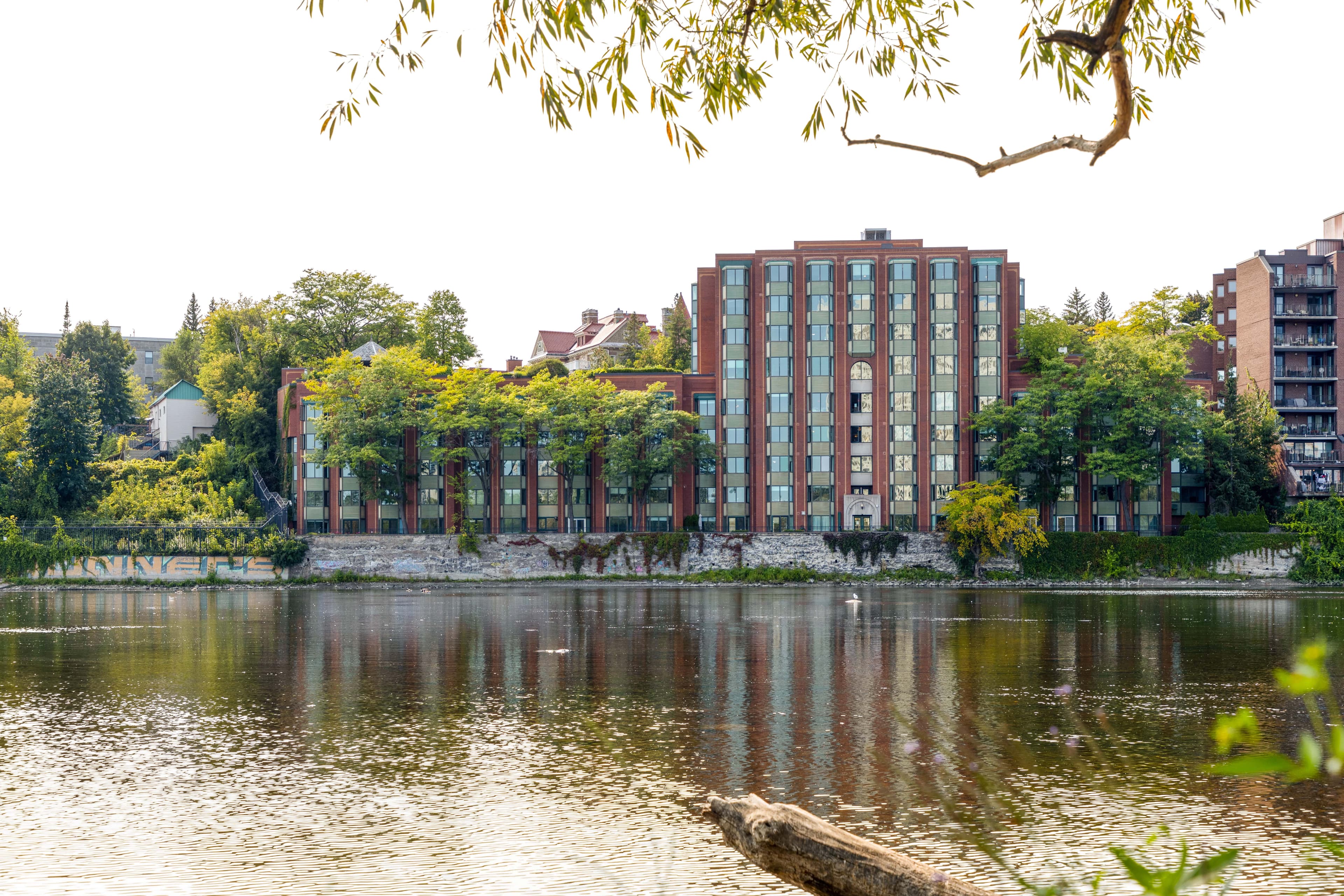
Riverflow Residences leases furnished, self-contained studios and one-bedrooms at 550 Wilbrod Street, a seven-minute walk from uOttawa — Junior Studio from $1,400, Studio $1,600, Studio Plus $1,720 and one-bedroom $1,920 per month, with flexible student lease terms set out on our students page. Utilities and parking are billed separately on some units; ask what is and is not included on your tour and get the answer in writing before you sign. That is the standard to hold every landlord to, including us.
For the lifestyle half of this decision — social life, privacy, structure, the winter commute — read the companion piece on the first-year residence versus apartment reality check. And if you are returning rather than starting, our take on whether residence is worth it in second year runs the same question from the returning-student side.
Riverflow Residences welcomes all students and residents in full compliance with the Ontario Human Rights Code. Figures cited are drawn from the published sources named and will change; confirm current rates before budgeting. This is general information, not financial or legal advice.