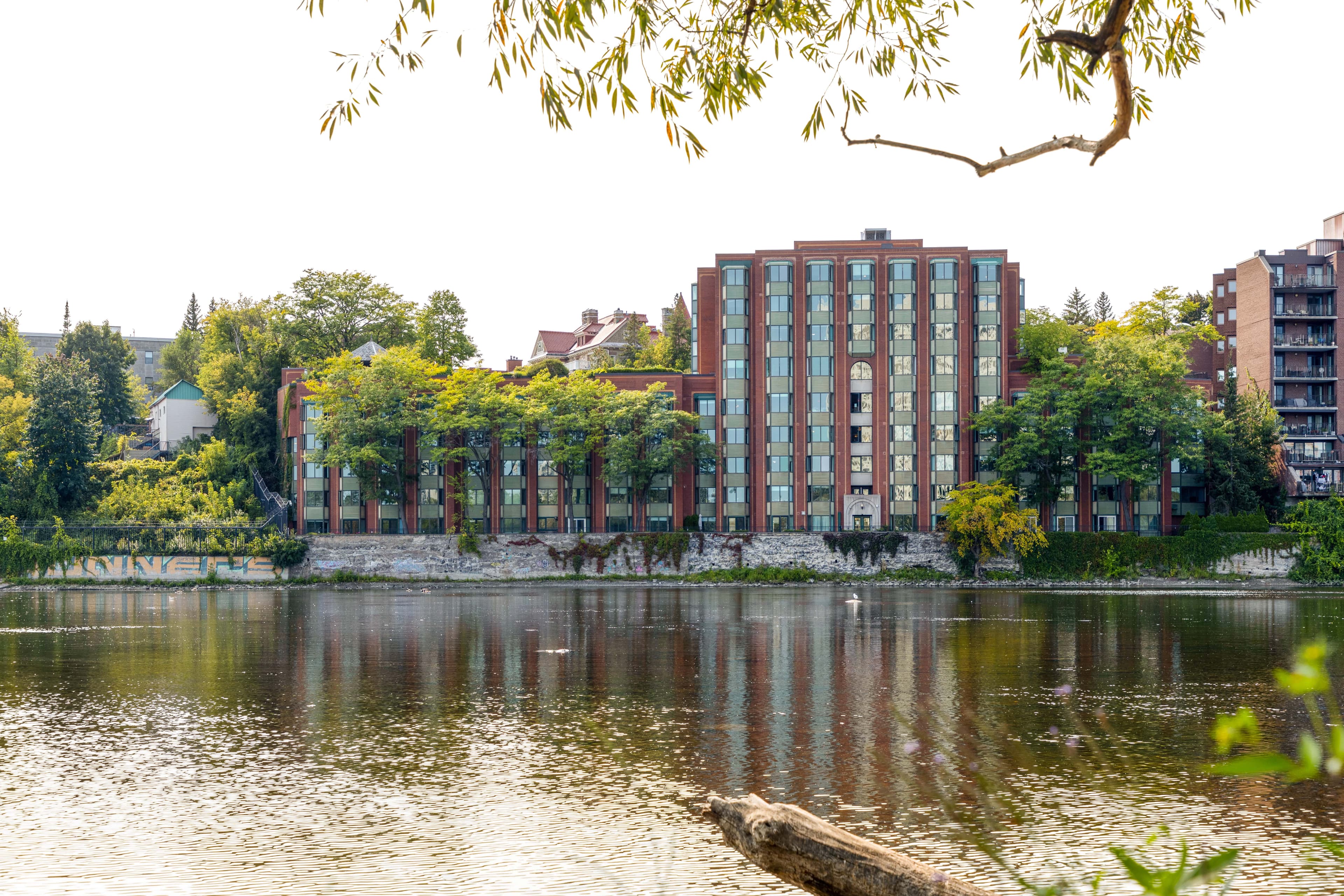
Renting a room is the cheapest legitimate way to live near a downtown Ottawa campus. It is also the arrangement with the least legal protection, the most variable quality, and the highest concentration of things nobody tells you until after you have signed. This guide covers the process end to end — budgeting, searching, viewing, the legal position under Ontario law, deposits, signing, moving in, housemates, and what to do when something goes wrong.
If you want the fast version — a printable sequence of steps — use our room rental checklist for Ottawa. This guide is the long version: the reasoning behind each step, and the parts of Ontario tenancy law that decide how much protection you actually have.
Step 1 — Build a budget before you look at a single listing
Two numbers before anything else: what you can afford, and what the market charges.
What the market charges. In 2026, individual rooms in Sandy Hill — the neighbourhood bordering uOttawa — typically run $650 to $980 a month, with the spread reaching about $1,300 for premium options. Rooms in shared apartments commonly list around $840-$860, and all-inclusive private bedrooms have been advertised from about $595.
A useful mental anchor: around $800-$850 is the middle of the market for a room within walking distance of uOttawa.
What you can afford. Build the full monthly number, not just rent:
| Line | Typical monthly (CAD) |
|---|---|
| Room rent | $650-$1,300 |
| Utilities share (if not included) | $20-$50 |
| Internet (if not included) | $0-$30 share |
| Groceries | $300-$450 |
| Phone | $35-$60 |
| Transit | Included via U-Pass for full-time uOttawa students |
| Personal / books / supplies | $150-$300 |
Set a ceiling before you start. Searching without one is how students end up justifying $200 a month above market because a room looked nice on a Tuesday.
Step 2 — Decide where, honestly
Location in Ottawa is a trade between rent and commute, and the trade is worse than the raw numbers suggest because of winter.
- Sandy Hill — 5-15 minute walk to uOttawa, densest student market, $700-$1,300. The default for main-campus students.
- Centretown / Downtown — $680-$1,175, 15-25 minutes on foot or a short O-Train ride.
- ByWard Market / Lowertown — steps from campus and the city's nightlife core; upper end of central pricing; loud.
- Vanier — $730-$1,050, short bus or bike, the best value close to the core.
- Old Ottawa South / Glebe — quieter, pricier, better positioned for Carleton than uOttawa.
- Nepean / suburbs — cheapest rooms in the city, 30-45+ minutes of transit each way.
Because full-time uOttawa students already have the U-Pass bundled into compulsory ancillary fees, moving further out does not save you transit fares. It only costs you time — which weakens the suburban case considerably.
Step 3 — Where to search
Use several sources; no single one covers the market. Listing platforms (Zumper, Rentals.ca, PadMapper, Kijiji, Roomies) carry the volume. uOttawa publishes off-campus housing resources. Managed residences list on their own sites and are the most verifiable. Word of mouth — student societies, programme cohorts, departing upper-years — surfaces rooms that never list publicly. Social media groups offer the highest volume and the lowest verification. Our guide on how to find a room to rent near uOttawa goes deeper on each channel.
Timing. The Ottawa student market runs on a fixed calendar: research January to March, commit April to June for a September start. Everything after that is the leftovers market. In 2026 prices are flat-to-softer than last year, but the calendar has not changed.
Step 4 — Shortlisting: what to filter on
Filter hard on four things before you spend time on viewings.
- Total monthly cost, not headline rent. Add estimated utilities and internet. A "$700 plus utilities" room and a "$780 all-inclusive" room are often the same room financially, and the second is the safer bet in a January.
- How many people share the kitchen and bathroom. A room in a two-bedroom apartment and a room in a six-bedroom house are advertised identically and lived entirely differently. Ask the number.
- Who else lives there and who owns it. This determines your legal position — see Step 6.
- Lease term and end date. An eight-month term ending in April and a twelve-month term ending in August are very different commitments if you leave Ottawa for the summer.
Step 5 — The viewing, and the questions to ask
Go in person if you possibly can. If you are abroad, insist on a live video walkthrough showing the actual unit and the street address — a recorded video proves nothing.
Inspect: water pressure and hot water, heating, signs of damp or mould, window seals, locks on the bedroom door, kitchen and bathroom condition, laundry, storage, and mobile signal.
Ask, and write down the answers:
| Question | Why it matters |
|---|---|
| Which utilities and internet are included? | Decides true monthly cost |
| What does a typical January utility bill look like? | Ottawa winters are the stress test |
| How many people share the kitchen and bathroom? | The daily reality of the house |
| Does the owner or the owner's family live here? | Determines RTA coverage — see Step 6 |
| Is there a written agreement, and may I see it? | Verbal-only arrangements are hard to enforce |
| What is the lease term and end date? | Summer gap or overpayment risk |
| How is rent paid, and to whom? | Should be a traceable method to a verifiable party |
| Who handles repairs, and how fast? | Sets your expectations honestly |
| Are guests, quiet hours and cleaning covered by house rules? | Prevents the most common housemate conflicts |
| Why is the current occupant leaving? | Frequently the most revealing question you will ask |
Never pay a deposit for a room you have not seen, to a person you have not verified. Pressure to transfer quickly, refusal to show the unit, and demands for payment by wire, cryptocurrency or gift cards are the standard patterns — our guide to spotting an Ottawa room rental scam covers them in full.
Step 6 — The legal bit: are you a tenant, or not?
This is the part of room renting almost nobody researches, and it decides everything that follows.
Most Ontario renters are protected by the Residential Tenancies Act (RTA). But there is a critical exemption, at section 5(i): if you are required to share a kitchen or bathroom with the owner of the property, or the owner's spouse, child or parent (or the spouse's child or parent), and that person actually lives in the building, the RTA does not apply to you.
The consequences are serious. Without RTA coverage the standard eviction process does not apply — you can be asked to leave without the notice periods and Landlord and Tenant Board process a tenant would get — the rent increase guideline does not protect you, and deposit rules and interest requirements do not apply in the same way.
Two clarifications that matter enormously:
Sharing with other tenants does not trigger the exemption. If you share a kitchen and bathroom with four other renters and the owner lives elsewhere, you are generally covered by the RTA. It is specifically sharing with the owner or the owner's immediate family living in the building that removes protection.
Labels do not decide it. Calling you a "roommate", "occupant", "guest" or "licensee" does not automatically strip your RTA rights. The Board and the courts examine the substance of the arrangement, not the wording.
So ask one specific question at every viewing: does the owner, or a member of the owner's immediate family, live in this building, and will I share a kitchen or bathroom with them? The answer tells you which rules govern your year.
Step 7 — Deposits, guarantors and what a landlord may lawfully ask
For arrangements covered by the RTA, Ontario law is narrow and clear.
Only one deposit is legal: last month's rent (LMR). It may be applied only to the final month's rent — not to damage or cleaning. A landlord may not lawfully collect a separate damage deposit, a key deposit beyond replacement cost, or a pet deposit. Interest is owed on that deposit annually, at the rent increase guideline rate — 2.1% for 2026.
Rent increases are capped and noticed. For units covered by the guideline, increases are limited to 2.1% in 2026, require 90 days' written notice on Form N1, and may happen no more than once every twelve months. Entry is regulated too: at least 24 hours' written notice, only between 8:00 a.m. and 8:00 p.m., for specified reasons.
If someone asks for first, last and a damage deposit, or several months up front, they are asking for something Ontario law does not permit in a covered tenancy.
Guarantors. Students without Canadian rental history are often asked for a guarantor who co-signs and becomes liable. That is normal. Being asked for a guarantor and months of prepaid rent and a damage deposit is not.
Step 8 — Signing
The Ontario Standard Lease is mandatory for most residential tenancies, and has been since 30 April 2018. If you are not given one, you may request it in writing; if it is not provided within 21 days, you may withhold one month's rent.
Before you sign, confirm in the written agreement: the rent, due date and payment method; exactly which utilities and services are included; the term (start date, end date, and what happens afterwards); the deposit amount and that it is described as last month's rent; which room is yours and what shared space you may use; and any house rules appended as additional terms.
Get everything you were told verbally written into the agreement. "He said internet was included" is not a document.
Step 9 — Move-in
Do three things on day one. Photograph everything, dated — your room, shared spaces, appliances, any existing damage — because that is your evidence in a later deposit dispute. Test what you were promised: heat, hot water, internet speed, locks, laundry. Confirm the practicalities in writing: who handles repairs, how rent is paid, bin days, parking, access codes.
Report anything broken immediately, in writing, and keep the message. A repair request sent by text on day two is a far stronger position than the same complaint raised in March.
Step 10 — Living with housemates
Most room-rental problems are not legal, they are social, and almost all are foreseeable. Agree explicitly, early, on four things: cleaning (a rota or an agreed standard), guests and overnight visitors (how many, how often, how much notice), noise and quiet hours (particularly around exams), and shared costs (groceries, supplies, how bills are split and paid).
The most common failure mode is the unspoken assumption. Fifteen minutes of conversation in September prevents most of what goes wrong by January.
Step 11 — When things go wrong
Repairs are not being done. Put the request in writing and keep copies. Under the RTA, landlords are responsible for maintenance and repair. If it is not resolved, the Landlord and Tenant Board is the venue.
An illegal deposit was collected. For a covered tenancy, a landlord may only hold last month's rent. Raise it in writing; the LTB can order the return of unlawful charges.
You are being pushed to leave. In a covered tenancy, eviction requires proper notice and an LTB process. If your arrangement is exempt under s. 5(i), those protections do not apply — which is why you should have established your status before signing.
You need to leave early. Assigning or subletting is the usual route in a covered tenancy, and a landlord may not unreasonably refuse. Do not simply stop paying and move out; that follows you.
Free advice is available: the Landlord and Tenant Board publishes plain-language guidance, and community legal clinics and university student services help students specifically.
When a room stops making sense
Rooms are the lowest-cost path near uOttawa, and for a large share of students they are the right answer. But the value case rests entirely on the low price, and it weakens as the price rises. Once a room passes roughly $1,300 a month, you are within a few hundred dollars of a self-contained studio with your own kitchen and bathroom — while still sharing a kitchen with four people under someone else's house rules.
Make that comparison deliberately rather than by accident: the arithmetic is in room rental versus studio cost in Ottawa and the lifestyle trade-offs in our private studio versus shared room breakdown.
For transparency: Riverflow Residences sits on the other side of that comparison — furnished, self-contained studios and one-bedrooms at 550 Wilbrod Street in Sandy Hill, seven minutes' walk from uOttawa, from $1,400 a month. Private studios, not rooms in shared houses. If a room is the right call for your budget, take a room; this guide exists to help you take a good one.
Riverflow Residences welcomes all students in full compliance with the Ontario Human Rights Code. This guide is general information, not legal advice — confirm current Ontario tenancy rules at the Landlord and Tenant Board before acting.