"Private student residence" is a category name doing a lot of work. It gets applied to purpose-built towers with study lounges, to converted houses with a management company, and occasionally to a landlord who has written the phrase into a listing. For a student comparing options for January or for next year, the useful question is not what the category is called but what it actually trades away — because it trades something away against both of the alternatives.
This post defines the category honestly and sets out what you give up in each direction. Our comparison of uOttawa's residence buildings covers the university's own stock, and the first-year residence versus apartment reality check handles the non-financial side of that decision.
What the category actually means
Strip the marketing and four characteristics distinguish a private student residence from both a university residence and an ordinary rental:
- Professional management rather than an individual landlord. A company, a leasing team, a maintenance process, a named route for a repair request. One counterparty, who is still there in March.
- Purpose-built or purpose-converted for students. Unit mix, furniture, study space and amenity choices made for an academic occupant rather than inherited from a family house.
- Self-contained or semi-self-contained units. This is the dividing line that matters most in practice. Many private residences let a self-contained unit with its own kitchen and bathroom, which is a materially different product from a room in a shared house — and from a dorm room with a corridor bathroom.
- Fixed-term leases, usually furnished, sometimes aligned to academic terms. Where term alignment is offered it is the category's strongest feature for students; it is also the feature most often assumed rather than confirmed. Ask, in writing, for the specific terms available.
The category is growing, and still small
Worth knowing because it shapes what you will find. Urbanation's study of Ontario's purpose-built student accommodation market projects 6,313 beds delivered in 2026 — the largest year on record, roughly two and a half times the 2015–2025 annual average of 2,526 beds. The pipeline is larger still: 70,450 beds under construction or proposed province-wide, although only 10,080 are actually under construction across 25 projects, and deliveries are expected to slow in 2027 and 2028 as tighter financing conditions work through.
Against that, purpose-built and on-campus supply together are equivalent to just 20.6% of Ontario university enrolment. Most planned growth is privately owned rather than university-built.
Two conclusions a student can act on. The category is real and expanding, so it is worth searching for by name. And it remains a small minority of the housing available, so it will not be the default answer in Ottawa — it is one option among three, not a tier everyone can access.
What you give up against a university residence
This is where honest comparison matters most for a first-year, and where private residences lose on things that are hard to price.
- No built-in cohort. A residence floor delivers forty people in your situation, in your building, on your first week. A private residence delivers neighbours. For many students that is the difference between a straightforward first term and a lonely one, and no amenity space substitutes for it.
- No residence-life structure. No community advisers, no floor programming, no built-in escalation route when a living situation goes wrong socially rather than contractually.
- No meal plan. You cook, which is cheaper and more work. Whether that is a loss depends entirely on you — our guide to whether the uOttawa meal plan is mandatory covers where the compulsory plans apply and what they cost.
- Distance, usually. A residence is on campus. A private residence is a walk, however short.
- Guaranteed alignment with the academic year. University residences are built around it. Private operators vary, and the variance is on you to check.
What you give up against an ordinary rental
- Price. Usually the straightforward trade. Urbanation's figures for Downtown Toronto put purpose-built student accommodation at $8.09 per square foot against $4.47 for post-2000 purpose-built rental — a different city and a different market, so do not transfer the ratio to Ottawa, but the direction is consistent: professional management, furniture and amenities are priced in, not donated.
- Negotiating room. An individual landlord with a vacancy in December may move on terms. A leasing team with a rate card generally will not.
- Choice of location. You take the building where it is. A rental search covers the whole city, and there are genuine savings further out — our affordable room rental neighbourhoods ranking prices those savings against the commute they cost.
- Space per dollar. A shared house usually buys more floor area for the same money, with housemates attached.
- Rules. Guest policies, quiet hours, common-room conditions. Reasonable, and real.
What you get, stated plainly
- Predictability. One agreement, one rent, one maintenance route, no housemate-sourcing, no rent split to negotiate.
- Furniture on day one, which on a short stay is worth more than it looks.
- A counterparty with a process. The single most underrated feature. A repair request that goes to a leasing office behaves differently from one that goes to a landlord's personal phone.
- Screening that can work without Canadian credit history. Ontario Regulation 290/98 under the Human Rights Code is clear that a lack of rental or credit history should not be viewed negatively, and professional operators are generally more practised at applying it — our guide to renting in Ottawa without Canadian credit sets out your actual position.
Who it suits, and who it does not
It tends to suit: international students booking remotely who need certainty before they land; second-year and graduate students who have done the shared-house year and priced the privacy; anyone on a term-length stay for whom unfurnished is impractical; students who want the dispute surface of shared living removed.
It tends not to suit: first-years whose main need is a cohort, which residence supplies and a private building generally does not; students for whom price is the binding constraint, since the category sits above the room market; anyone who wants a particular neighbourhood more than a particular building.
Questions to ask any private residence
Apply these to every operator in the category, including the one at the end of this post:
- *Who would I be signing with, and does Ontario's Residential Tenancies Act cover the arrangement?* The deciding question is who the counterparty is — our guide to signing a room rental lease safely in Ontario sets out the two tests.
- What lease terms are actually available, with dates, not "we're flexible"?
- What is included and what is billed separately — itemised, in writing, per unit type. Never accept a bundled all-in figure that nobody will break down.
- Who is on site, and when? Staffed hours versus an answering service is the practical difference between the categories.
- What is the deposit, and is it lawful? In Ontario that means a rent deposit of at most one month applied to the last month, and a key deposit capped at replacement cost. Nothing else.
- What happens if I withdraw from my programme or my permit is refused? Ask before you need the answer.
- What does the unit look like, unstaged? Request a live video walkthrough of the actual unit if you cannot attend — our virtual tour guide covers how to run one properly.
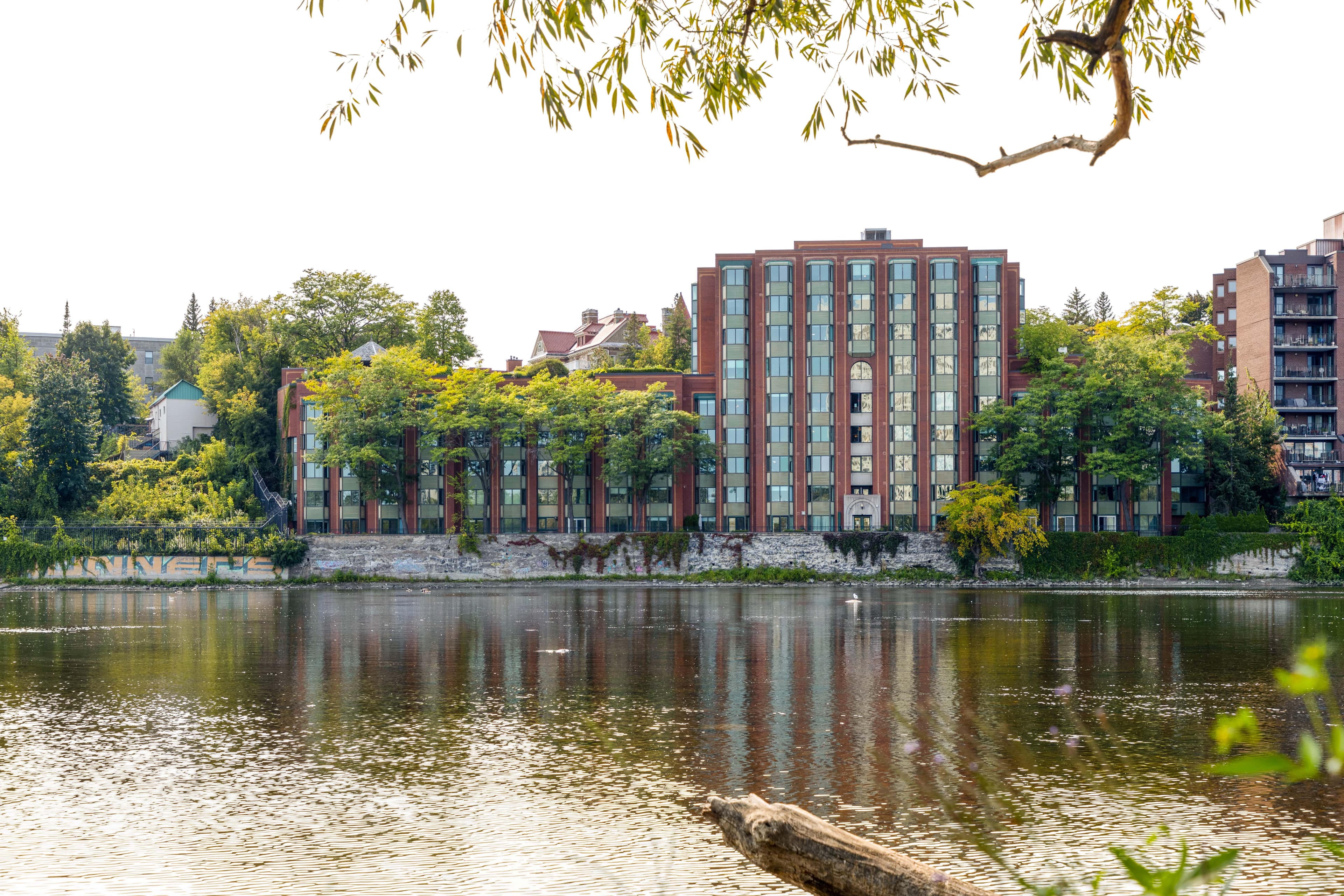
Riverflow Residences is one building in this category: professionally managed, furnished self-contained studios and one-bedrooms at 550 Wilbrod Street in Sandy Hill, seven minutes' walk from uOttawa. We would rather you arrived having asked all seven questions above — of us and of everyone else — than take the category label on trust. The gallery shows the units as they are.
The category deserves neither the enthusiasm of its own marketing nor the suspicion it sometimes attracts. It is a product with a specific shape: more certainty than a rental, less community than a dorm, and a price that reflects both. Whether that is the right trade is a question about you, not about the building.
Riverflow Residences welcomes all students and residents in full compliance with the Ontario Human Rights Code. Market figures are from the sources named and were current at publication; Toronto rent-per-square-foot figures are cited as directional and do not represent Ottawa pricing.