If you are booking for a January start, you are doing it from another country, in another time zone, on the strength of photographs taken by someone trying to sell you something. Uncomfortable, and entirely normal — thousands of students do it successfully every intake.
What separates the students who arrive to a real building from the ones who arrive to a wrong address is not instinct. It is whether they ran a process. Here is that process, built around the one tool doing the heavy lifting: a live video tour, correctly conducted.
Our guide to spotting a room rental scam in Ottawa covers the fraud patterns. This is the narrower question of how you prove one specific place is real without standing in it.
Why "live" is the entire point
A pre-recorded walkthrough proves that a building exists somewhere, at some point, and that somebody filmed it. It proves nothing about this unit, now, or that the sender has any connection to it. Footage is trivially lifted from an old listing, a different building, another city.
A live call does what a recording structurally cannot: it lets you direct the camera. That single difference is what makes it evidence — the questions below work only because you choose where the lens goes.
So the first filter is binary. Ask for a live video tour. If the answer is no — travelling, bad signal, "I'll send you a video instead", "the tenant won't allow it" — that is your answer about the listing, not about the schedule. Legitimate operators do live tours routinely and will offer a slot in your time zone without being pushed.
The live-proof moves
Fraudsters have recordings. They do not have the building. Four requests separate the two, in about ninety seconds:
1. Ask for something unpredictable. "Walk to the window and show me the street, left and right." "Open that cupboard." "Hold your hand in front of the lens." A recording cannot comply; someone replaying old footage stalls, drops the connection, or changes the subject.
2. Ask about today's weather on camera. "Could you step to the window — is it snowing right now?" Ottawa weather is checkable from anywhere in the world in five seconds, and it is a cheap, non-confrontational liveness test.
3. Ask for the unit number out loud, at the door. Then have them film the door number and the corridor on the way in. You are building a chain from the street address to the specific unit.
4. Ask to see the unit you would occupy — not a show suite. In a managed building a fair answer may be "yours is occupied until December; here is the identical layout plus photographs of it." Reasonable. "They're all the same" is not.
The script for whoever is holding the camera
You get twenty minutes of someone else's hands. Spend them on what photographs hide, and ask out loud so the answers land on your recording of the call.
Heat and winter. Where is the heat source? Is heat included in the rent? What did this unit cost to heat last January? Ottawa's January normal daily mean sits near −10°C — an average high around −5.2°C and a low around −14°C on the 1991–2020 normals — so "it gets a bit cold" is not an answer. Have the camera find the radiator or baseboard heater and the thermostat, and ask who controls it.
Windows. Every window opened and closed on camera, then a slow pan along the frame. You are looking for condensation trapped between panes: a failed seal, and a cold room.
Water. Hot tap run and timed out loud together. Shower on. Toilet flushed while the shower runs. Camera under the sink — staining, a bucket or warped particleboard is a leak being managed rather than fixed.
Ceiling and corners. A slow pan across the ceiling, especially beneath an upstairs bathroom, and into the corners. Black speckling and water staining photograph away to nothing and cost you a year.
Sound, signal, scale. Thirty seconds of silence so you can hear the street. Signal bars in that room specifically. Then have them stand in the doorway and walk the room counting paces — photographs make rooms larger than they are. For a shared house, add the kitchen, the fridge opened, and the bathroom you would use. Our in-person inspection walkthrough lists the same items in the order you move through a property; work from it on the call.
Verifying the address and the operator — separately, yourself
This is the step most students skip, and the one that actually catches fraud. Do all of it outside the conversation, using sources the other party does not control.
- Put the street address into a map and street-level imagery. Does a building of that description exist there? Does the façade match the photographs? Is the unit count plausible?
- Reverse image search every listing photograph. If the same interior turns up in another city, under another name, on a stock-photography site, or in a two-year-old listing at a different address, you have your answer.
- Search the building address on its own, not the landlord's name. A real building near a university has history: past listings, reviews, forum mentions.
- Check the legal entity. A managed residence operates as a registered company. Look it up in the federal or Ontario corporate registry and confirm the name on the lease matches an entity that exists.
- Confirm contact details independently. Find the operator's website by searching, not by clicking a link in an email, and call the number published there. Fraud frequently runs through a lookalike domain and a number that appears only in the message thread.
- Cross-check the price. A 2026 Ottawa average of roughly $2,145 across unit types, with one-bedrooms near $1,955, is your sanity line. A furnished unit near campus at half the going rate is not a lucky break; the low price is the red flag.
Fraud at scale is not an edge case. The Canadian Anti-Fraud Centre recorded over $704 million in reported fraud losses in Canada in 2025, and estimates only 5% to 10% of frauds are reported at all. The checks above cost you an hour.
What a legitimate operator will agree to
A real operator will, without friction:
- Hold a live video call at a time that works in your time zone.
- Show the actual unit, or the identical layout plus photographs of yours, and say which it is.
- Put the full lease in front of you before any money moves, including what is and is not included.
- Accept a lawful deposit only — in Ontario, a rent deposit of no more than one month's rent, applied to your last month. Damage deposits and non-refundable "holding fees" are not permitted charges.
- Accept payment by a traceable method to a named entity that matches the lease, and issue a receipt.
- Give you the building address, the legal entity name, and a phone number you can verify independently.
- Let someone local view it on your behalf.
A refusal on any one of those is informative. A refusal on two is a decision. And a legitimate operator will not demand payment by wire, gift card or cryptocurrency, refuse all live viewing, insist you commit the same day, or ask for money before you have seen a lease.
Record the call, then get it in writing
Ask permission and record the tour, or at minimum screenshot what matters — the door number, the window view, the heat source, the thermostat. Then email the same day listing what you were told: rent, inclusions, what is billed separately, move-in date, lease length, deposit. Ask for confirmation by reply.
That email is the difference between a promise and a term. If the answers change once written down, you have learned something for the price of a message. Our pre-arrival booking guide covers the payment sequence that follows.
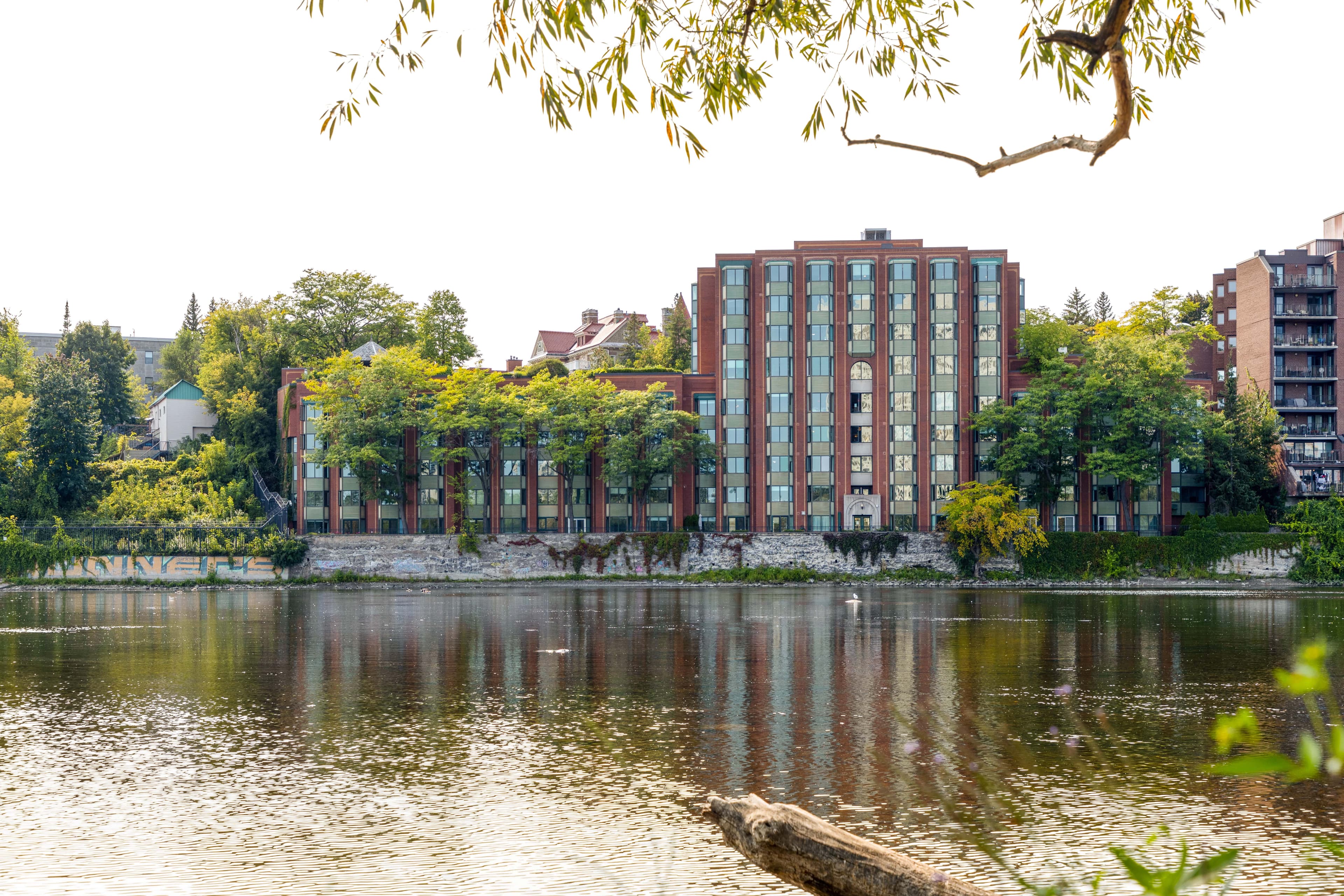
Riverflow Residences runs live video tours of 550 Wilbrod Street, scheduled in your time zone, and expects the questions above rather than resents them. Ask on the call what is included and what is billed separately — utilities and parking among them — and expect the answer in writing before you sign.
Riverflow Residences welcomes all students and residents in full compliance with the Ontario Human Rights Code. General information, not legal advice — for tenancy questions contact Ontario's Landlord and Tenant Board or a community legal clinic.