Not every bad rental is a scam. Some of the worst student tenancies in Ottawa are perfectly real — a real landlord, a real building, a real key handed over — and still leave a student paying an illegal deposit, living without a written lease, or unable to get a broken heater fixed in February. Fraud is one risk category; bad tenancies are another, and far more common.
Below are seven warning signs you can spot before you commit: what each looks like, why it matters, and what to do. If your concern is outright fraud — fake listings, stolen photos, landlords who don't exist — read how to spot a room rental scam in Ottawa first. This post picks up where that one leaves off.
1. A deposit that breaks Ontario law
What it looks like: "First, last, and a $500 damage deposit." Or "a non-refundable $300 holding fee to take it off the market." Or a request for four months of rent up front because you're an international student.
Why it's a risk: Under Ontario's Residential Tenancies Act, a landlord may collect a rent deposit of no more than one month's rent (or one week's rent on a weekly tenancy), and that deposit must be applied to your last month of rent. It is not a damage deposit. Security or damage deposits are not permitted in Ontario at all. The deposit must also earn annual interest at the provincial rent increase guideline rate — 2.1% for 2026.
A landlord asking for an illegal deposit is telling you one of two things: they don't know the law, or they don't intend to follow it. Neither bodes well for the eleven months after you sign.
What to do: Say plainly that Ontario permits first and last month only. A legitimate landlord will correct the ask. If they hold firm, walk — and if you've already paid, you can apply to the Landlord and Tenant Board (Form T1) to recover an illegal charge.
2. Payment demanded by wire transfer, gift card, or cryptocurrency
What it looks like: A landlord who will take a deposit only by international wire, by e-transfer to a personal name you can't verify, or — increasingly — by crypto, framed as "faster for overseas students."
Why it's a risk: These rails are chosen because money can't be traced or recovered once it moves. No legitimate Ottawa landlord requires any of them. This is the brightest line in student renting.
What to do: Pay a named, verified recipient by a traceable method, only after a lease is signed, and get a written receipt every time. If you're booking from abroad and a wire is genuinely your bank's only option, insist on a signed lease and a verified corporate recipient — never an individual's personal account.
3. You're not allowed to see it
What it looks like: "The current tenant won't allow viewings." "I'm working in Dubai until September." "Here's a video walkthrough instead." The unit is always unavailable to view, and there is always a plausible-sounding reason.
Why it's a risk: A viewing is the only moment you can verify that the unit exists, matches the photos, and is genuinely controlled by the person renting it to you. A recorded video is no substitute — it can be old, or someone else's unit.
What to do: Insist on an in-person viewing or a live video call where you direct the camera: show me the unit number, walk to the window, run the tap. If you're overseas, send a friend or ask your university's housing office. Refusal to permit any live viewing is close to disqualifying on its own.
4. Pressure to decide today
What it looks like: "Three other students are coming this afternoon." "I need the deposit tonight to hold it." "If you're serious, e-transfer now." Urgency arrives before any paperwork does.
Why it's a risk: Time pressure here is a technique, not a market condition. Its function is to stop you completing the checks on this list. Ottawa's student market genuinely is competitive in the May–August peak, which is exactly why the tactic works.
What to do: Separate deciding fast from paying fast. Deciding quickly on a unit you've viewed, from a landlord you've verified, on a lease you've read is fine. Paying before those three exist never is. A landlord who won't wait a few hours for you to read a lease doesn't want you to read it.
5. No written lease — or no Ontario Standard Lease
What it looks like: "We'll do it on a handshake." "I'll email you a confirmation." Or a one-page document that reads like it was typed from memory.
Why it's a risk: For most private residential tenancies in Ontario signed on or after 30 April 2018, the landlord is required to use the Ontario Standard Lease (Residential Tenancy Agreement, Form 2229E). If a written lease wasn't provided, you may request one in writing, and the landlord has 21 days to supply it. Without a written agreement, every dispute later — rent amount, term, who pays hydro, whether you may have a guest — becomes one person's word against another's.
Note one exception that matters in student housing: if you rent a room and must share a kitchen or bathroom with the owner or the owner's spouse, child, or parent, the RTA does not apply to you at all under section 5(i). No Landlord and Tenant Board hearing, no protection against a rent increase, no repair order. Sharing only with other tenants does not create this exemption — sharing with the owner does.
What to do: Ask early, before viewing: "Is this an Ontario Standard Lease, and does the owner live in the unit?" The two answers together tell you what legal protection you'll actually have.
6. A landlord you can't identify or reach
What it looks like: Communication only by messaging app. No last name. A phone number that rings out. A manager who is "away" whenever a question is asked. No address on any paperwork.
Why it's a risk: Every tenancy problem — a repair, a dispute, a deposit return — depends on reaching a named, accountable person. If you can't reach them while they're trying to rent to you, you won't reach them afterwards.
What to do: Get a full legal or business name, a working phone number and a mailing address before you sign — you'll need all three for any LTB filing anyway. Search the name, and if it's a room in a house, ask for proof they own or manage it.
7. The listing doesn't line up with itself
What it looks like: Photos of a bright modern suite attached to an address that satellite view shows as a fifty-year-old walk-up. Square footage that doesn't match the room. A price well below everything else on the street. Two listings for "the same" unit at different prices.
Why it's a risk: Sometimes it's fraud; often it's a stale listing, a bait price, or a unit renovated in the photos and not in reality. Either way, what you're being shown is not what you'd be renting.
What to do: Put the address into a map with satellite and street view, reverse-image-search the photos, and compare the price against the local range — in Sandy Hill, rooms broadly run in the high hundreds and studios from the mid-$1,400s, so a "central furnished studio, $850" is a signal rather than a bargain. Our Ottawa room rental price analysis is a useful benchmark.
Quick reference
| Red flag | Fastest check |
|---|---|
| Illegal deposit | Ontario allows first + last month only; no damage deposits |
| Wire / gift card / crypto | Refuse; pay traceably after a signed lease |
| No viewing allowed | Demand a live, camera-directed tour |
| Pay-today pressure | Decide fast if you like; never pay fast |
| No written lease | Ask for the Ontario Standard Lease (21-day rule) |
| Unreachable landlord | Get full name, phone, mailing address before signing |
| Listing inconsistencies | Satellite view + reverse image search + price sanity check |
Removing the category rather than checking the boxes
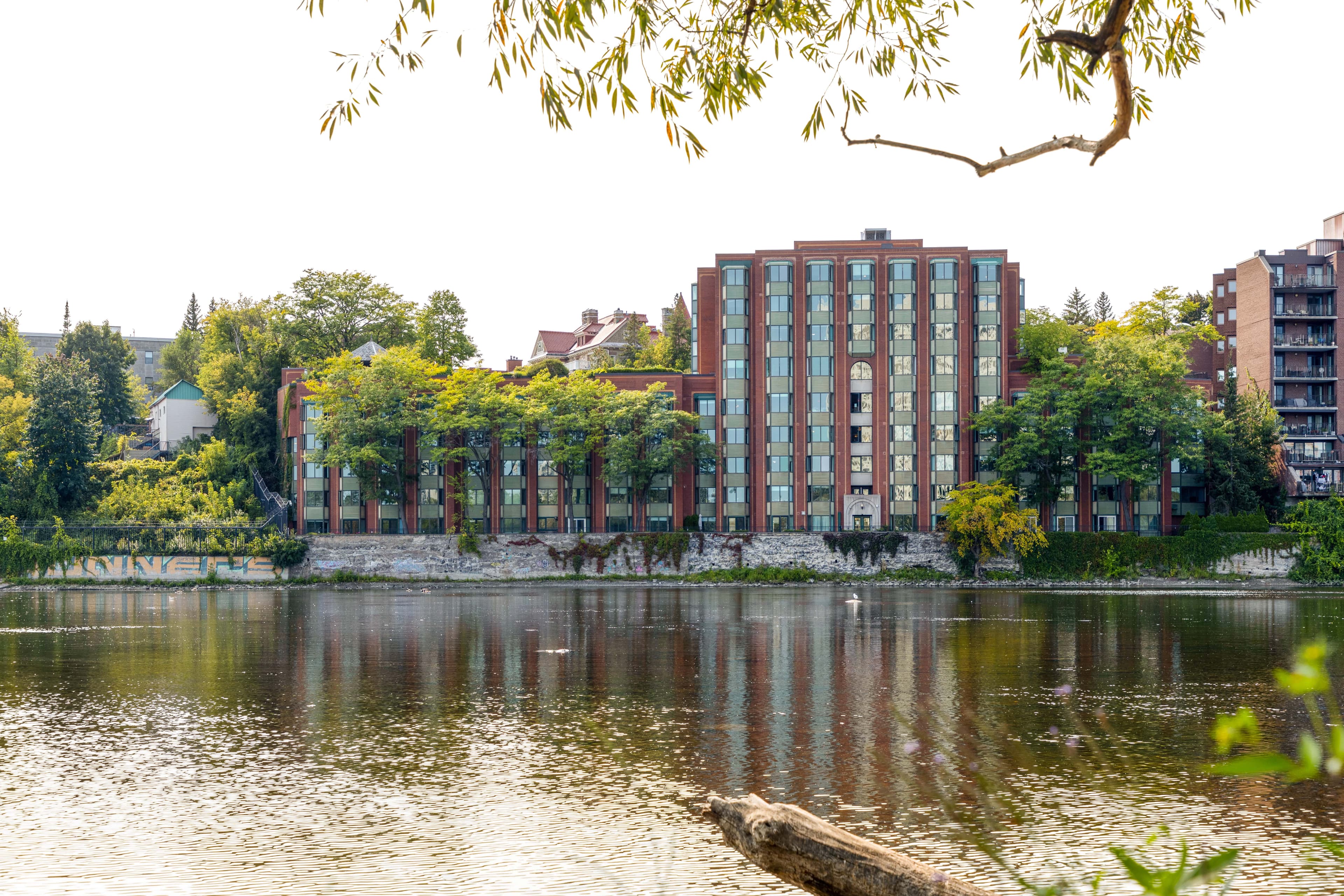
Every item above exists because renting from an individual landlord puts the whole burden of verification on the student. A professionally managed building answers most of this list before you ask: a fixed, checkable address, a leasing team you can reach by name, scheduled viewings, a written lease as standard. Riverflow Residences at 550 Wilbrod Street in Sandy Hill rents self-contained furnished studios and one-bedrooms — not shared rooms — a seven-minute walk from uOttawa. It is not the cheapest way to live near campus, and it removes most of what's on this page.
Whichever route you choose, the sequence protects you: view it, verify the person, read the lease, then pay. Students who get burned almost never miss every warning sign — they see one, feel the clock, and sign anyway.
Riverflow Residences welcomes all students and residents in full compliance with the Ontario Human Rights Code. This article is general information, not legal advice. For tenancy disputes, contact the Landlord and Tenant Board; for suspected fraud, contact the Canadian Anti-Fraud Centre and local police.